
Blog
See Dr. Kenneth M. Mash’s remarks to the Board of Governors – April 11, 2024
The April 11 Board of Governors meeting was streamed via YouTube. Below are APSCUF President Dr. Kenneth M. Mash’s comments as prepared. The embedded video is set to start with Mash’s remarks.
Chair Shapira, chancellor Greenstein, governors, presidents, and guests:
The last few years have been challenging ones indeed. And many of my faculty and coach colleagues have stretched themselves to the limit to survive a pandemic and its aftermath, including the too-little-talked-about impact of working with students who through no fault of their own were no longer socialized to the classroom. They have had to make consolidation work (despite their personal perspectives on the decision). They have had to adjust their teaching and coaching based on the changing needs of students. They have adapted to new modes of teaching. They have dealt with the continued financial squeezes that confront our universities and continually figure out how to do more with less. They have had to adjust to new systems on the fly. They have had to deal with circumstances mandated from above as our administrations have attempted to follow the instructions of this Board and System leadership. They have had to rewrite curriculum, deal with a new human-resources organization, meet new fundraising goals, and respond to multiple university policy changes. And that’s the short list.
They have gone through all of this while trying to help their students succeed. Chair Shapira, Chancellor Greenstein, governors: Nobody cares more about student success than my colleagues, our colleagues in other bargaining units, and all of the staff that work day to day to make sure that the System lives up to its charge of providing a high quality education at an affordable price.
Thus, my coach and faculty colleagues are relieved to have new contracts and they are appreciative of the fact that these agreements go a long way toward recognizing their contributions. We are appreciative of the members of the negotiating teams that gave so much to reach an agreement. We especially appreciate the chancellor’s participation at the negotiation — we do know it is a rare thing to have a System leader who is willing to get down into the weeds and do the difficult work of negotiating a very complex faculty contract.
I have said publicly that we believe there is much to be proud of in these contracts, and those who read them thoroughly will see changes that will reflect well on our System and, in fact, I believe our System will be pointed to as a leader in higher education because of some of these important changes.
Thank you very much for your attention.
BOG approves APSCUF contracts
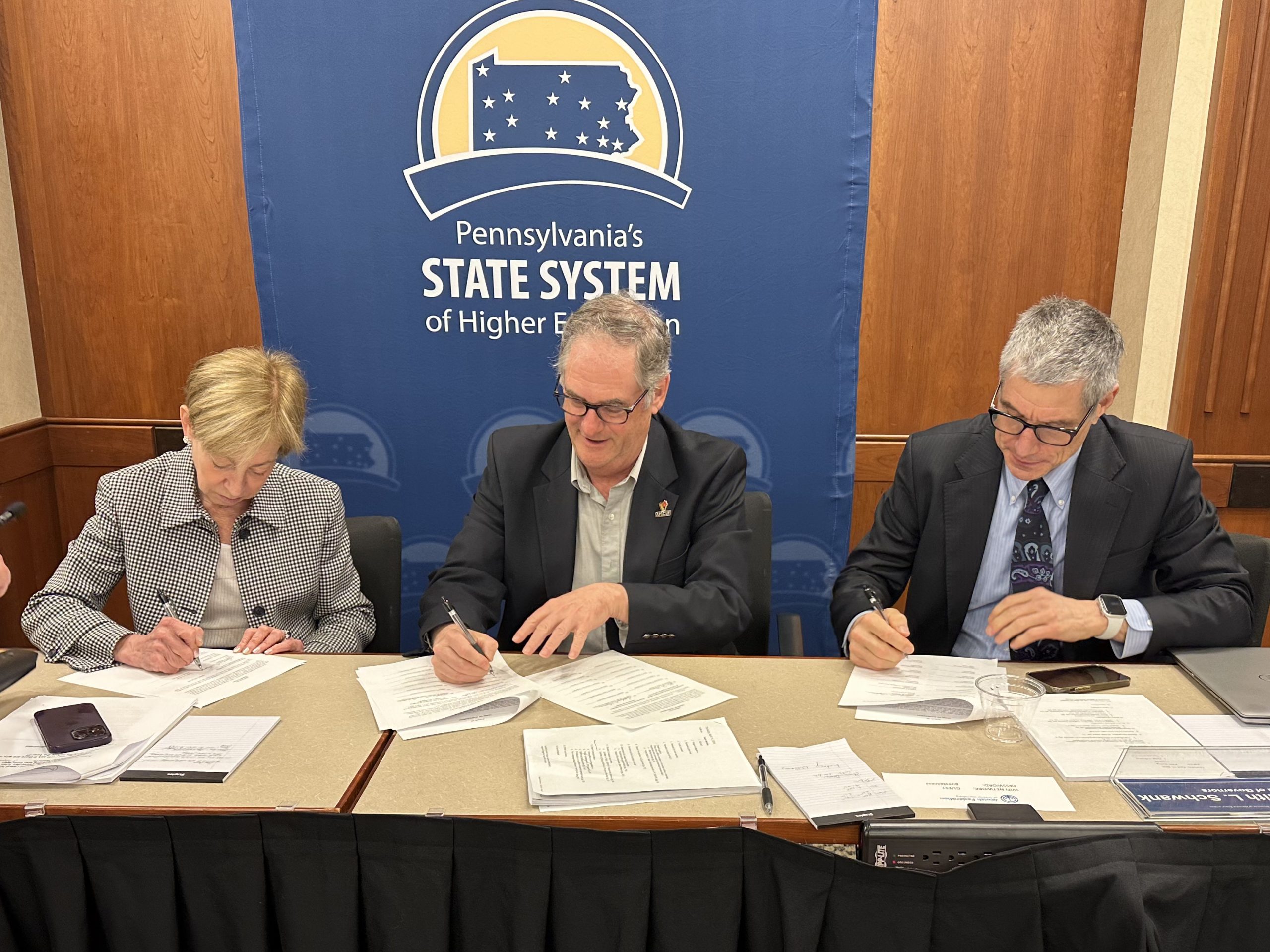 The Board of Governors of Pennsylvania’s State System of Higher Education today approved APSCUF’s faculty and coach collective bargaining agreements. Click here to read the release.
Photo: Signing the APSCUF contracts are, from left, State System Board Chair Cynthia D. Shapira, APSCUF President Dr. Kenneth M. Mash and Chancellor Daniel Greenstein. APSCUF photo/Sean Crampsie
The faculty and coach votes are in
 The Association of Pennsylvania State College and University Faculties has released an update about faculty and coach voting on tentative agreements. Click here to read the release.
Members: Vote this week on our tentative agreements
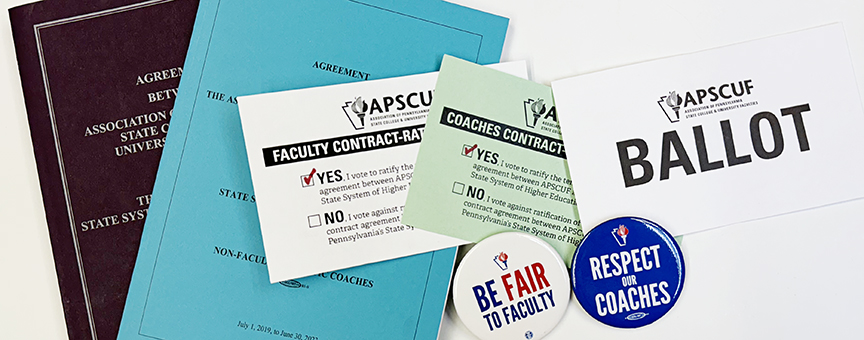
Voting on tentative agreements has begun for faculty and coach members. Members, see information from your chapter office for the exact times, dates, and locations this week on your campus. The Association of Pennsylvania State College and University Faculties is slated to tally votes Friday, April 5, at its Harrisburg office.
Coach negotiations update – March 21, 2024
 The Association of Pennsylvania State College and University Faculties has released an update about negotiations. Click here to read the release.