
Blog
See Dr. Kenneth M. Mash’s remarks to the Board of Governors – July 9, 2026
The July 9 Board of Governors meeting was streamed via YouTube. Watch APSCUF President Dr. Kenneth M. Mash’s comments in the video below or read the transcript in this post.
Good morning, Chair Shapira, chancellor, governors, presidents, and guests. My name is Ken Mash, and I’m the statewide president of the Association of Pennsylvania State College and University Faculties, which represents the faculty and coaches at our 10 universities.
Given what transpired here yesterday, there’s certainly a lot to talk about, but it does seem to me that there’s a bright red line that runs through all the discussion, whether it be about tuition, three-year degrees, scholarships, the financial health of our universities, etc. And that bright red line is the chronic bipartisan underfunding of our State System. And that’s not just true about our System. It’s true about public higher education generally in the Commonwealth. And those who work at Third and State streets need to be educated about what is actually happening in our System, what is going on at the universities. They need to understand exactly what is at risk for the students of this Commonwealth.
I don’t think that there is a very good understanding because I think very often we go in and we talk about the bright things, the bright pictures, and everything, and that’s good PR generally. But when it comes to talking to people in their offices, getting them to understand, we need them to know the real challenges that our universities are facing — and because of that the challenges that our students are facing.
I do want to talk specifically about three-year degrees. I’ve talked here before about three-year degrees. I was just saying that the great musician Elvis Costello in a song called “Red Shoes” at one point said, “I used to be disgusted, but now I try to be amused.” That’s generally true of the attitude I try to take to things nowadays, given everything that’s going on. But occasionally there’s an issue that hits you close to home. I wasn’t really sure why this three-year degree conversation was one that was really kind of hitting me in the core, hitting me in the gut. Why was it that this issue caused such a visceral reaction in me? And I think after contemplating it for a while that the reason is that I think back to being a first-generation college student from a working-class family that was worried about paying the bills, that was worried even at that time about affording college and sending me to college. And I remember sitting at that kitchen table, and I remember all the advice that was out there: “You can go to this university. (And they went to see my guidance counselor.) You can go to this one, you can go to that one, you could work it out, you could pay it out over time.” And I remember my parents, who worked so hard, looking at me and saying, “You can go here because that’s the college we can afford. That’s just it.” And they believed you go to college, you go to college. It didn’t really make a difference what college you went to. It was out there. And I just imagine these conversations that could happen at those kitchen tables today. Right? Here’s a three-year degree. Right? That’s what we can afford: the three-year degree. Not “Is it good?” Not “Will it be the best?” Because frankly, people just don’t know. When you are a first-generation college student, you have no clue. The only thing you have to go on is the reputations of the institutions. And when you put your name on a degree, you are standing behind it and saying that it is everything that we say it is.
And I think you made the comment yesterday, calling it baccalaureate — bachelor’s degrees in plain language — you’re going to go get your B.A. or your B.S.
Two weeks ago, the American Association of University Professors and AFT put out a statement in response to some actions that were being taken to approve three-year degrees. But I read in part that “(three-year degrees) threatens academic integrity by substituting for a comprehensive education a stripped-down curriculum that prioritizes speed over essential intellectual development. This move may initially create the illusion of reducing costs, but it ignores the root causes of skyrocketing higher education tuition.”
And they go on to talk about the underfunding in the states of higher education and also the need to fund properly Pell grants and TRIO and other programs that are going on. Now, I do believe that most people who support three-year degrees are doing so out of concern for cost and believe that they’re doing what is best for students out of real concern. I just think that reducing the number of years in college is not the solution.
First, if there’s a demand from students and the business community for reduced-credit degrees, why don’t we just create a separate degree that is a reduced-credit degree? We can call it whatever. A junior bachelor’s? Maybe that’s a little too condescending. But some other name for the degree that says exactly what it is but doesn’t try and pretend that these two things are equivalent. Are we worried about — and this is the sense that I’ve gotten in the past — that we’re worried about the amount of work that would be required to do so, that there would be additional paperwork, that we’d have to maybe go to the legislature, then we may have to go to other institutions to get approval for those degrees. But, OK. Do that. Let’s be honest in what we are doing. It’s worth the time and the effort to maintain integrity and honesty. If it’s not that, the only other thing I can think of is that institutions are banking on the confusion it will create.
Make no mistake, once you put an institution’s name on a degree, like I said, the average person will assume that they are equivalent. And it’s not. But the confusion will be there.
Speaking of demand from businesses, are we certain that that demand will always be there? Are we certain that some won’t catch on and suddenly say, “Hey, we want as a requirement for these positions a 120-credit baccalaureate.” Are we sure that that won’t happen? Then what happens to our students, if that occurs? They’re out in the cold. Do we say, “Oops, sorry we experimented with your life?” Now some try to dismiss critics of these degrees by saying that we’re caught up in old thinking, this is the new way of looking at things, and we have to get on board. But I’d say in response that there are a few things older than trying to sell someone a pig in a poke, of promising one thing and delivering yet another thing. Promising a full-quality degree, but actually offering something that’s short of that. The skills that employers consistently say that they want and what they need are the soft skills: critical thinking, the ability to relate to others, being able to work in groups, being able to appreciate different types of problem-solving.
And, yeah, we only require a certain number of GE credits and a certain number of majors, and there’s other credits that you could take, but those are filled with courses that are teaching you different approaches to problem-solving, different ways of thinking about the world. That’s what you get in college, and that’s what you should get with a bachelor’s degree. And it is that that has made the American higher-education system the envy of the world. I was privileged to be able to travel to China several times for the university with the East Stroudsburg delegation, and I can tell you they were very jealous of the type of education that we provided because it was just different at its core as far as what the expectations were, what the liberal-arts aspects of it were, what the free thinking was.
Now, even at your previous board workshop, you brought in a speaker from some consulting group to discuss the future of higher education. In the first half of the speech, she was lauding three-year degrees as the future and that it was something you had to get on board with in order to make it happening. Then in the second part of this speech, when discussing AI, she started discussing the need for the soft skills that students should have to be competitive in a world that is being overcome with AI. Did nobody else recognize the contradiction that existed there when we start talking about three-year degrees? Now the newspapers are filled with stories from those who are involved in AI — Sam Altman and other people talking about how students in fact need those soft skills. In fact, recently John Collison, the co-founder of Stripe, told Fortune magazine that double majoring will be the key, and that was something he had learned from Charlie Munger some time before and that it was even more relevant today. Double majoring so you have different ways of looking at the world and different options. And here we are actually talking about reducing the amount of education that we provide. Further, if you talk to my colleagues in an honest conversation, they will tell you that too many students that we are admitting are underprepared for the college experience. Well, if they’re underprepared coming in, and we’re telling them you only have to be here for three years, how are they ever going to be ultimately prepared for their future? And it really strikes me — and this I think goes to the first thing I talked about — as eye-opening: When we saw the list of the institutions that were involved with offering three-year degrees, notably absent from that list — any elite university, any Research 1 university, any university that looks at itself with pride. They’re not jumping on this bandwagon. And I can’t help but see the hidden discrimination of this conversation. The universities that are talking the most about this are universities that tend to serve first-generation students, students of color, and rural communities. The universities that move students into the middle class. I can’t help but wonder why it’s OK to offer these less-than degrees to these students but not to the other students that are there.
Last, a word about last-dollar scholarships. For 10 years now, my colleagues and I have been working on the Pennsylvania Promise. We have worked on it without any help from the State System. From a few people, we faced even some scorn and hostility about the idea of the Pennsylvania Promise. That bill provides a last-dollar scholarship that is paid for by the Commonwealth. The sponsors are Jordan Harris and Vince Hughes. And the bill passed the House for the first time a couple of weeks ago with bipartisan support. The last-dollar scholarship that’s being proposed here would be paid for by the universities. The last-dollar scholarship proposed by the Pennsylvania Promise is paid for by the Commonwealth. It’s time for the Commonwealth to stand up for its students. And I certainly urge all students, parents, faculty, and everyone to get in touch with their legislators and to fight for the Pennsylvania Promise.
Thank you very much for your time.
2025–26: A year of faculty and coach accomplishments
Throughout the past year, our APSCUF members have achieved a lot. Here are some of those accomplishments.
At Millersville University, Associate Professor Miriam Witmer has been coordinating a pipeline program, the Future Educator Pathway, between the university and the School District of Lancaster.
Matthew Wallace, professor of biology at East Stroudsburg, published a guide to treehoppers.
Indiana University of Pennsylvania Professor Pao Ying Hsiao held a cooking series for 12 homeschooled students in Indiana County.
John Stanley, Kutztown University history professor, discussed the history of Japanese World War II internment camps and his own family’s history inside the camps.
Coach Dave Osanitsch of Shippensburg University was named the 2026 Atlantic Region Men’s Outdoor Track and Field Coach of the Year.
Slippery Rock University Assistant Professor Erin Kouwe was the creator, performer, sound designer, and choreographer of the theatrical dance production of “Grappling.”
West Chester University Associate Professor Christopher Roemmele taught an experimental lesson to local high school students about mapping out landscape elevations without visual verification.
Beth Rogowsky, professor from Commonwealth University-Bloomsburg, discussed a study she co-authored about the comprehension rates between people listening to audiobooks, people reading from an e-reader page, and people who used both.
Steven Granich, professor at Commonwealth University-Lock Haven, worked with adults and children in Nicaragua.
Eun-Joo Kwak, professor of piano at Commonwealth University-Mansfield, performed a piano duo recital.
Danielle Fleming, PennWest Clarion women’s basketball coach, and Joseph Croskey, PennWest Clarion associate professor, participated in the Friends of the Clarion Free Library’s Guest Bartender Fundraiser.
Professor David Argent of PennWest California assessed the Monongahela River’s aquatic life via drone.
Coach Chris Rhodes, PennWest Edinboro swim coach, was chosen as the Pennsylvania State Athletic Conference Coach of the Year.
Cheyney University Assistant Professor Ezekiel Crenshaw was selected as a member of the PROPEL HBCU Faculty Fellows Academy.
Congratulations, APSCUF members, on your achievements, including those not mentioned above. To submit accomplishments for APSCUF to share, please email links to .
—Ethan Rapp,
APSCUF intern
Past APSCUF president gave all for her colleagues
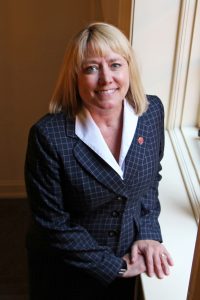
Dr. Jamie Martin was president of APSCUF from 2020 to 2022. She was the organization’s second elected woman president. APSCUF file photo
APSCUF is mourning the loss of Immediate Past President Dr. Jamie Martin, who helmed the organization from 2020 to 2022. She died Friday.
Martin led APSCUF through the pandemic, retrenchment, and consolidation. After her two-year term, she did not seek reelection due to medical treatment. Click here to read her obituary.
“I shudder to think where we might have been (given all that has transpired), had she not been in the leadership role exerting her steely resolve and giving all for her faculty and coach colleagues,” said Dr. Kenneth M. Mash, whose APSCUF presidency has bookended Martin’s, in 2022.
Martin was a professor of criminology and criminal justice at Indiana University of Pennsylvania. She served as chair of her department and once joked that she “was initially drawn to [criminology] because my parents thought it was a bad idea.”
Martin’s involvement in APSCUF started early: She served IUP APSCUF on the representative council, as grievance chair, as a member of meet-and-discuss, and on the executive council. She was an IUP APSCUF delegate to APSCUF’s legislative assembly. Also at the state level, Martin was an officer-at-large, vice president, and on faculty and coach negotiations teams. In 2020, she became the organization’s second elected woman president.
“I was so very lucky to have Jamie in my life, and all APSCUF members were fortunate to have a leader of her caliber to guide our union,” Mash told members this week.
John Gump served as APSCUF’s coach executive leader alongside Martin.
“Jamie was a staunch advocate for coaches,” Gump said. “She really understood the issues important to our members and worked tirelessly on their behalf. When you go into competition, you want the best players on your team. In contract negotiations, you want the smartest person in the room on your side of the table. Jamie was always the smartest person in the room.
“The lives of so many coaches were made better because of the tenacious work done by Jamie Martin. The benefits of her efforts will be felt for years to come. That’s a remarkable legacy left by a remarkable woman.”
As an APSCUF leader, Martin praised her colleagues, staff, and other supporters.
“My favorite part of the job is the people,” she said as she began her presidency in 2020.
As her presidency concluded in 2022, Martin wrote about the period and its challenges.
“I have been reflecting on transitions that we all face, both personally and professionally, in our lives,” she said in a message to members. “Some are painful, some are frightening, some are joyful, some are hopeful, and all result in change and growth.”
* * *
More memories
“What I remember most about Jamie is her big beautiful smile and her contagious laugh. I only knew the encouraging, warm, inclusive parts of Jamie but I am glad she was also a fierce defender of what is right and all things APSCUF.” —Professor Jeananne Nicholls, Slippery Rock University
Have a Martin memory to add to this post? Email it to . Please include your name and university.
Click here to view comments made on Facebook.
* * *
Send a message
For privacy purposes, we are not sharing the family’s contact information, but we want to provide an opportunity for APSCUF members, former students, etc. to send notes to Dr. Martin’s family. Messages submitted via this form will be shared with the family. If you prefer to send a physical card, mail it to APSCUF, 319 N. Front St., Harrisburg, PA 17101, Attn: Martin family. Physical mail will be scanned and shared with the family.
* * *
Remarks from Martin
“While uncertainty exists, I know that certainty is present in the resolve among my colleagues to provide the best educational experiences that we can for our students.”
—Dr. Jamie Martin to the Board of Governors, June 10, 2020
“The cavalier manner in which ‘rightsizing’ is discussed — making it sound innocuous — is distressing. It is not innocuous. I had a student ask me, ‘What does retrenchment even mean?’ I explained that it means a person is being fired through no fault of their own. It is not because they are not performing their job. It is not because of a disciplinary issue. It is because a decision was made to reduce the workforce. It is imperative that everyone is aware of what we are talking about: 300 or more faculty members losing their careers and their healthcare in the middle of a global pandemic. I have concerns that the ‘rightsizing’ is going to disproportionately impact my colleagues who are women and who are minority. And all of this occurring because of the directive to reach an arbitrary student/faculty ratio of 2010–11 that was an anomaly.”
—Dr. Jamie Martin to the Board of Governors, Oct. 14, 2020
“We all know why diversity is so important: It is critical to helping us explore new ideas and exposing us to different perspectives and experiences. Diversity promotes critical thinking and broadens and enhances our understanding of the world. The fact that the leaders of our universities have become less diverse is troubling, and I think it is important to question why this has occurred.”
—Dr. Jamie Martin to the Board of Governors, April 15, 2021
“I think we all agree that we must work together to improve our State System of Higher Education, and APSCUF is committed to partnering in that work. However, we believe that rather than doing something, we should strive to be certain that it is the right thing.”
—Dr. Jamie Martin to the Board of Governors, June 30, 2021
“Our universities exist to provide access to an affordable, high-quality education for our students and to do all we can to help them succeed. As faculty and coaches, we see firsthand the importance of that affordability and access for our students and student-athletes, and in interactions with them we have learned that they lack important information about the consolidation. In my experience, too often decisions are made as if ‘we KNOW what is best for our students.’ I have learned that they are quite capable of fully articulating what they believe is best for them. Their questions and concerns should be heard, and their input should be valued on a change this monumental … “
—Dr. Jamie Martin to the Board of Governors, July 14, 2021
“We can all agree that the mission of our universities is to provide access to an affordable, high-quality education for the students of our Commonwealth and beyond. As faculty and coaches, we see firsthand how critical affordability is for our students and student-athletes. We know the importance of increased funding for our universities — and for the students enrolled in them. I pledge today that APSCUF will continue to work with the State System in advocating for the funding necessary to keep the promise of affordability and access to a high-quality education for students from all backgrounds.”
—Dr. Jamie Martin to the Board of Governors, Sept. 22, 2021
“To accomplish this mission, the State System must be appropriately funded: The General Assembly must be willing to invest in our students.”
—Dr. Jamie Martin to the Board of Governors, Oct. 13, 2021
“We are at an inflection point, and a very important question must be addressed: Are the universities in Pennsylvania’s State System of Higher Education state-owned and state-supported universities — or not?”
—Dr. Jamie Martin to the Board of Governors, Oct. 13, 2021
“Our students do amazing things while they are enrolled in our universities and after they leave them. They are first responders, nurses, police officers and physicians; they work with our children as teachers and counselors; they find success in business, science and art; they work for nonprofit organizations and in government. They take the lessons they have learned as student-athletes and apply them to sports careers or to other professional endeavors. We are the beneficiaries of their successes, and they deserve our applause and appreciation.”
—Dr. Jamie Martin to the Board of Governors, Feb. 3, 2022
“We need to acknowledge and address these challenges that our students face. We need to fulfill the promise of a high-quality and affordable college education. Our students deserve no less.”
—Dr. Jamie Martin to the Board of Governors, Feb. 3, 2022
“We all know why diversity is so important: It is critical to helping us explore new ideas and exposing us to different perspectives and experiences. Diversity promotes critical thinking and broadens and enhances our understanding of the world. The fact that the leaders of our universities have become less diverse is troubling, and I think it is important to question why this has occurred.”
—Dr. Jamie Martin to the Board of Governors, May 6, 2022
This post is under development and will change as more tributes are added.
Summer intern shares APSCUF goals
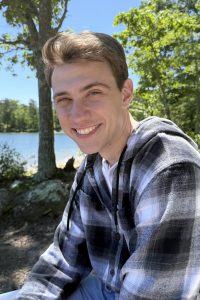
Photo courtesy of Ethan Rapp
My name is Ethan Rapp, and I am an undergraduate student at PennWest Edinboro. I will be entering my senior year as an education major with a concentration in social studies. Throughout my time in higher education, I have realized the importance of funding for public education. As a substitute teacher and a student worker in the library, I have seen firsthand in public schools how far each dollar can reach.
I am incredibly grateful to have the opportunity to work with APSCUF this summer. In these changing times, we need to strengthen and fight for public education. As a future educator, I have the same goals in mind as APSCUF, and that is why I am happy to be their 2026 summer intern and contribute to their mission!
—Ethan Rapp,
APSCUF intern
See APSCUF remarks to the Board of Governors – April 16, 2026
The April 16 Board of Governors meeting was streamed via YouTube. APSCUF President Dr. Kenneth M. Mash delivered brief extemporaneous comments and turned over the remainder of APSCUF’s time to Dr. Jessica Hughes, chair of APSCUF’s ad hoc disability-rights committee. The video is set to start at the beginning of Mash’s remarks. Hughes’ comments as prepared appear below. The referenced report, which was approved by APSCUF’s executive council, is embedded at the end of the post.
Hello. Last time, I spoke on behalf of myself and used my three minutes of public comment to talk about work the State System needs to do to bring all campuses into ADA compliance. Today, I’m proud to speak on behalf of APSCUF and PASSHE faculty with disabilities.
The APSCUF Disability Rights Committee was convened shortly after a coalition of faculty spoke out in the October 2024 Board meeting about the ways in which the State System has failed to uphold its commitments to accessibility and inclusion.
The document I’m presenting today demonstrates that this is still true. PASSHE is not upholding its own stated commitments
to [cultivate] diverse, equitable, and inclusive environments that allow all members of the State System community to thrive. (PASSHE DEI, n.d.)
Nor is the State System’s work currently “grounded in, …[built] upon, and …elevate[d in] the promising initiatives and thought leadership already occurring across the universities” (PASSHE DEI, n.d.).
Not only is PASSHE not upholding its inclusive mission, the State System has been in consistent and pervasive violation of civil rights law since the passage of the Americans with Disabilities Act (ADA) in 1990. The ADA is a bare minimum. This civil rights law establishes the floor for disability rights. More than three decades since it passed, PASSHE still has not met this threshold.
I’m here today with a Call for Action. We urge PASSHE to make more decisive moves to establish ADA compliance and eliminate disability discrimination across the State System.
Before I go on, let me reiterate that I am talking about civil rights of people with disabilities, who are estimated to comprise 20-25% of the human population, but these civil rights benefit everyone thanks to a phenomenon known in the disability community as the curb cut effect. Curb cuts are of course the small inclines that connect the sidewalk to the street at a corner. They were originally installed to enable wheelchair users to get around, but once they were everywhere we discovered that they make things better for everyone. They make corners more accessible for people with wheelchairs and other mobility aids, children, people who are just tired or injured or inebriated, people pushing strollers or grocery carts or carrying luggage. They help all of us avoid falling off the sidewalk and into the street at corners. This is the curb cut effect: Changes implemented to make things more accessible for people with disabilities increase access for all.
Similarly, I hope to convince you today that following the recommendations outlined in this Call for Action will be good for everyone in PASSHE, not just people with disabilities.
In the 15 months since the APSCUF Disability Rights Committee (DRC) was formed, we have worked to document disabled faculty members’ experiences and the disconnects between policies that look good on paper and practices on campus that create barriers for community members with disabilities.
The Call for Action I’m presenting today is a synthesis of this work. I’d like to thank everyone on the DRC, APSCUF leadership, and the APSCUF legal team for their help pulling it all together. As you can see, it’s a lot. 16 pages of ADA non-compliance issues, imperatives for action, and information about relevant disability law. I hope you find it informative and eye-opening and that you leverage the thought-leadership represented in this document to address the problems it describes.
Since I don’t have time to discuss the whole thing, in my remaining time I’ll just spotlight five ways in which HR policies have undermined PASSHE’s stated mission, specifically through 1) so-called full-time/full-duty work requirements, 2) denials of remote teaching accommodations, 3) onerous accommodation recertification requirements, 4) denial of appeals in faculty accommodations cases, and 5) misrepresentation of faculty rights under disability law. Changing HR policies and strengthening training for HR employees would not only address disability discrimination, it would reduce tedious and expensive bureaucracy, save our HR colleagues time better spent elsewhere, and help to re-establish trust between faculty, staff, and administration. These changes would also protect PASSHE from lawsuits.
1) Full-time/full-duty work requirements
To start with the first HR issue I mentioned: a “full time/full-duty” requirement has been referenced by HR and administrators across several campuses in a variety of cases to require faculty with disabilities to submit “full-time/full-duty” physician verifications at the end of a leave period saying that their disabilities are all gone and they’re back to 100%. But of course, that’s not how disabilities work. They are life-long conditions.
The “full-time/full-duty” policy has also been used repeatedly in denying remote accommodations for individuals with chronic health conditions and to compel “in-person” teaching, research, and service. This policy has also been cited by administration to justify refusing to compensate a faculty member for program coordinator work they’d already done, unless they submitted a doctor’s note saying they could go back to “full-time/full-duty” work.
To be clear, when I say cited, I mean that it’s been referenced in emails and conversations, but never presented in writing in full, though we’ve requested to see it many times.
A federal court has now twice held that the blanket implementation of a “full-time/full duty” requirement violates the Rehabilitation Act of 1973 and the Americans with Disabilities Act (ADA). In Oross v. Kutztown Univ. (2023 WL 4748186, at *20 (E.D. Pa. July 25, 2023), the federal judge explicitly stated: “… the University’s policy of requiring [the faculty member] to return to work with no restrictions amounts to essentially a ‘100% healed’ policy that is a per se violation of the RA [Rehabilitation Act of 1973].”
2) Denials of remote teaching accommodations
The “full-time/full-duty” policy has also been referenced when PASSHE universities have denied reasonable accommodations based upon an erroneous interpretation of the “essential functions” of faculty. Requests for remote work as an accommodation have been routinely denied based on a mistaken premise that in-person instruction is an essential function or that reassigning remote teaching to accommodate disabled faculty is unreasonable. All of these are unlawful reasons to deny accommodation.
Recently, the Pennsylvania Commonwealth Court (Pennsylvania W. Univ. of Pennsylvania, State Sys. of Higher Educ. v. Ass’n of Pennsylvania State Coll. & Univ. Faculty, _____ A.3d._____ (Pa. Commw. Ct. Jan. 9, 2026)) affirmed an arbitrator’s award after PennWest University denied remote instruction to a chronically disabled faculty member. In that case the Commonwealth Court upheld the Award stating,
The claim that face-to-face instruction was an essential job function was unproven, and a full-time online assignment, while perhaps inconvenient…, would not have posed an undue hardship. The [University’s] refusal to grant [the grievant’s] requested accommodation was, therefore, violative of the [CBA].
3) Onerous accommodation recertification requirements.
Moving on to onerous accommodation recertification requirements: Here, I’m referring to university policies requiring faculty to recertify their need for disability accommodations every six months. I mentioned this issue briefly during my last visit, and I’d like to elaborate a bit more now.
Certification of a disability is required as part of the initial interactive process by which employees access accommodations. Through this process, employers gain an understanding of the employee’s limitations to determine reasonable accommodations. To establish this understanding, disabled employees must spend a significant amount of time, effort, stress, and money visiting doctors and gathering paperwork.
Once an individual’s disability is clearly established and understood, the need to recertify them is unnecessary, again because disability is, by definition, chronic. It’s not going to go away. Unless something else changes, e.g., the accommodation is no longer effective, poses an undue burden, or there is a significant change in limitations, there’s no need to revisit the interactive process.
Yet, PASSHE HR departments routinely demand paperwork to recertify disability status every six months. Some universities have imposed re-certification requirements under threat of job loss. Others threaten the rescission of accommodation unless the faculty member recertifies.
Such recertification policies are not only unnecessary and unlawful, they’re disabling. The repeated demand for duplicate documentation and reapplication to access accommodations costs significant time, effort, and stress to faculty and administrators as well as health care professionals. For people with disabilities, the added workload and stress around accessing accommodations twice a year at the risk of losing their job and benefits causes flares (worsening symptoms) and consumes energy that we need to maintain health and do our jobs. These medical certifications are invasive, humiliating, and disruptive.
By contrast, students with disabilities only need to submit one certification. This practice should be consistently applied to all students, faculty, and staff. The fact that a different practice exists for students and faculty is evidence that faculty re-certification policies are discriminatory. As our lawyers point out, a divergent implementation of the interactive process is evidence of an arbitrary and retaliatory animus toward faculty and staff with disabilities.
4) Denial of appeals in faculty accommodations cases
With regard to the last two HR issues I raised, I’d like to quickly highlight that, In many instances, the HR office that denied an employee’s accommodation request is the very same office that reviews the employee’s appeal, which has led to many unjust denials to be upheld, resulting in grievances and litigation.
5) Misrepresentation of faculty rights under disability law
Finally, the APSCUF DRC has documented pervasive and significant flaws in HR departments’ explanations of FMLA and ADA policies. HR and administrators have mistakenly told faculty that they are not eligible for ADA accommodations when they are. When faculty and staff come to them with questions, HR and administrators have said different things. We therefore strongly recommend that our HR colleagues be trained on legal requirements so that they are able to provide clear and accurate answers on disability and leave policies.
To close, thank you for listening and for demonstrating a willingness to address these issues over the past year. We are encouraged by the changes that are already being implemented in ADA coordination at the State level. We think this is a first step and hope this Call for Action provides a blueprint for where to go next.
Hover over the document below to activate scrolling controls (at bottom of document).
Thank you for your patience as the document loads.