Blog
See APSCUF remarks to the Board of Governors – April 16, 2026
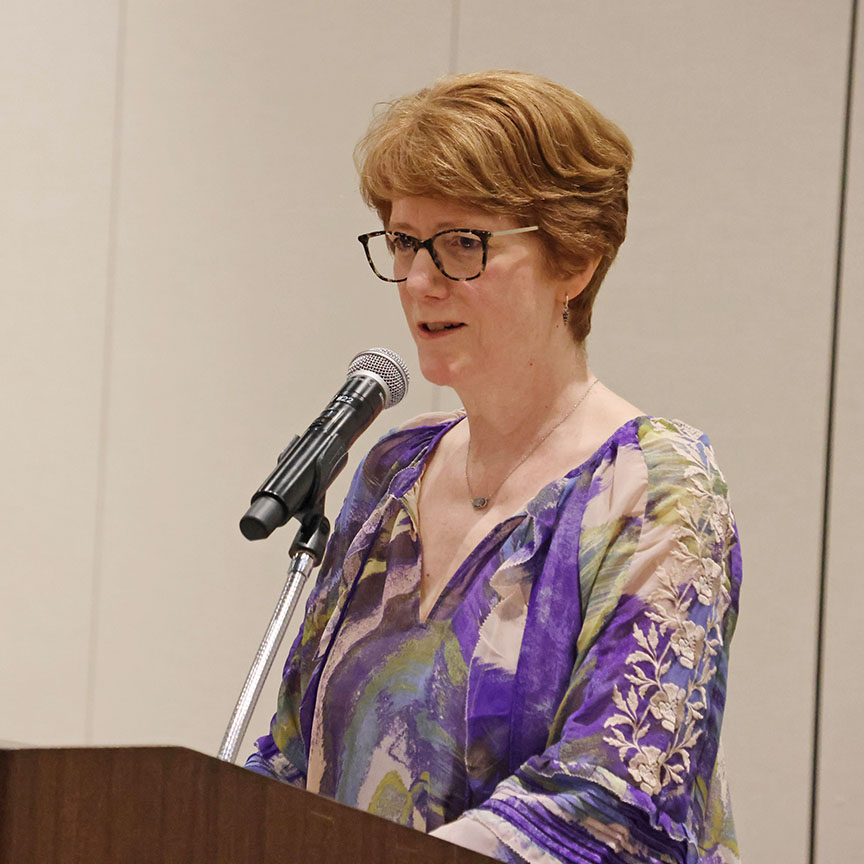
The April 16 Board of Governors meeting was streamed via YouTube. APSCUF President Dr. Kenneth M. Mash delivered brief extemporaneous comments and turned over the remainder of APSCUF’s time to Dr. Jessica Hughes, chair of APSCUF’s ad hoc disability-rights committee. The video is set to start at the beginning of Mash’s remarks. Hughes’ comments as prepared appear below. The referenced report, which was approved by APSCUF’s executive council, is embedded at the end of the post.
Hello. Last time, I spoke on behalf of myself and used my three minutes of public comment to talk about work the State System needs to do to bring all campuses into ADA compliance. Today, I’m proud to speak on behalf of APSCUF and PASSHE faculty with disabilities.
The APSCUF Disability Rights Committee was convened shortly after a coalition of faculty spoke out in the October 2024 Board meeting about the ways in which the State System has failed to uphold its commitments to accessibility and inclusion.
The document I’m presenting today demonstrates that this is still true. PASSHE is not upholding its own stated commitments
to [cultivate] diverse, equitable, and inclusive environments that allow all members of the State System community to thrive. (PASSHE DEI, n.d.)
Nor is the State System’s work currently “grounded in, …[built] upon, and …elevate[d in] the promising initiatives and thought leadership already occurring across the universities” (PASSHE DEI, n.d.).
Not only is PASSHE not upholding its inclusive mission, the State System has been in consistent and pervasive violation of civil rights law since the passage of the Americans with Disabilities Act (ADA) in 1990. The ADA is a bare minimum. This civil rights law establishes the floor for disability rights. More than three decades since it passed, PASSHE still has not met this threshold.
I’m here today with a Call for Action. We urge PASSHE to make more decisive moves to establish ADA compliance and eliminate disability discrimination across the State System.
Before I go on, let me reiterate that I am talking about civil rights of people with disabilities, who are estimated to comprise 20-25% of the human population, but these civil rights benefit everyone thanks to a phenomenon known in the disability community as the curb cut effect. Curb cuts are of course the small inclines that connect the sidewalk to the street at a corner. They were originally installed to enable wheelchair users to get around, but once they were everywhere we discovered that they make things better for everyone. They make corners more accessible for people with wheelchairs and other mobility aids, children, people who are just tired or injured or inebriated, people pushing strollers or grocery carts or carrying luggage. They help all of us avoid falling off the sidewalk and into the street at corners. This is the curb cut effect: Changes implemented to make things more accessible for people with disabilities increase access for all.
Similarly, I hope to convince you today that following the recommendations outlined in this Call for Action will be good for everyone in PASSHE, not just people with disabilities.
In the 15 months since the APSCUF Disability Rights Committee (DRC) was formed, we have worked to document disabled faculty members’ experiences and the disconnects between policies that look good on paper and practices on campus that create barriers for community members with disabilities.
The Call for Action I’m presenting today is a synthesis of this work. I’d like to thank everyone on the DRC, APSCUF leadership, and the APSCUF legal team for their help pulling it all together. As you can see, it’s a lot. 16 pages of ADA non-compliance issues, imperatives for action, and information about relevant disability law. I hope you find it informative and eye-opening and that you leverage the thought-leadership represented in this document to address the problems it describes.
Since I don’t have time to discuss the whole thing, in my remaining time I’ll just spotlight five ways in which HR policies have undermined PASSHE’s stated mission, specifically through 1) so-called full-time/full-duty work requirements, 2) denials of remote teaching accommodations, 3) onerous accommodation recertification requirements, 4) denial of appeals in faculty accommodations cases, and 5) misrepresentation of faculty rights under disability law. Changing HR policies and strengthening training for HR employees would not only address disability discrimination, it would reduce tedious and expensive bureaucracy, save our HR colleagues time better spent elsewhere, and help to re-establish trust between faculty, staff, and administration. These changes would also protect PASSHE from lawsuits.
1) Full-time/full-duty work requirements
To start with the first HR issue I mentioned: a “full time/full-duty” requirement has been referenced by HR and administrators across several campuses in a variety of cases to require faculty with disabilities to submit “full-time/full-duty” physician verifications at the end of a leave period saying that their disabilities are all gone and they’re back to 100%. But of course, that’s not how disabilities work. They are life-long conditions.
The “full-time/full-duty” policy has also been used repeatedly in denying remote accommodations for individuals with chronic health conditions and to compel “in-person” teaching, research, and service. This policy has also been cited by administration to justify refusing to compensate a faculty member for program coordinator work they’d already done, unless they submitted a doctor’s note saying they could go back to “full-time/full-duty” work.
To be clear, when I say cited, I mean that it’s been referenced in emails and conversations, but never presented in writing in full, though we’ve requested to see it many times.
A federal court has now twice held that the blanket implementation of a “full-time/full duty” requirement violates the Rehabilitation Act of 1973 and the Americans with Disabilities Act (ADA). In Oross v. Kutztown Univ. (2023 WL 4748186, at *20 (E.D. Pa. July 25, 2023), the federal judge explicitly stated: “… the University’s policy of requiring [the faculty member] to return to work with no restrictions amounts to essentially a ‘100% healed’ policy that is a per se violation of the RA [Rehabilitation Act of 1973].”
2) Denials of remote teaching accommodations
The “full-time/full-duty” policy has also been referenced when PASSHE universities have denied reasonable accommodations based upon an erroneous interpretation of the “essential functions” of faculty. Requests for remote work as an accommodation have been routinely denied based on a mistaken premise that in-person instruction is an essential function or that reassigning remote teaching to accommodate disabled faculty is unreasonable. All of these are unlawful reasons to deny accommodation.
Recently, the Pennsylvania Commonwealth Court (Pennsylvania W. Univ. of Pennsylvania, State Sys. of Higher Educ. v. Ass’n of Pennsylvania State Coll. & Univ. Faculty, _____ A.3d._____ (Pa. Commw. Ct. Jan. 9, 2026)) affirmed an arbitrator’s award after PennWest University denied remote instruction to a chronically disabled faculty member. In that case the Commonwealth Court upheld the Award stating,
The claim that face-to-face instruction was an essential job function was unproven, and a full-time online assignment, while perhaps inconvenient…, would not have posed an undue hardship. The [University’s] refusal to grant [the grievant’s] requested accommodation was, therefore, violative of the [CBA].
3) Onerous accommodation recertification requirements.
Moving on to onerous accommodation recertification requirements: Here, I’m referring to university policies requiring faculty to recertify their need for disability accommodations every six months. I mentioned this issue briefly during my last visit, and I’d like to elaborate a bit more now.
Certification of a disability is required as part of the initial interactive process by which employees access accommodations. Through this process, employers gain an understanding of the employee’s limitations to determine reasonable accommodations. To establish this understanding, disabled employees must spend a significant amount of time, effort, stress, and money visiting doctors and gathering paperwork.
Once an individual’s disability is clearly established and understood, the need to recertify them is unnecessary, again because disability is, by definition, chronic. It’s not going to go away. Unless something else changes, e.g., the accommodation is no longer effective, poses an undue burden, or there is a significant change in limitations, there’s no need to revisit the interactive process.
Yet, PASSHE HR departments routinely demand paperwork to recertify disability status every six months. Some universities have imposed re-certification requirements under threat of job loss. Others threaten the rescission of accommodation unless the faculty member recertifies.
Such recertification policies are not only unnecessary and unlawful, they’re disabling. The repeated demand for duplicate documentation and reapplication to access accommodations costs significant time, effort, and stress to faculty and administrators as well as health care professionals. For people with disabilities, the added workload and stress around accessing accommodations twice a year at the risk of losing their job and benefits causes flares (worsening symptoms) and consumes energy that we need to maintain health and do our jobs. These medical certifications are invasive, humiliating, and disruptive.
By contrast, students with disabilities only need to submit one certification. This practice should be consistently applied to all students, faculty, and staff. The fact that a different practice exists for students and faculty is evidence that faculty re-certification policies are discriminatory. As our lawyers point out, a divergent implementation of the interactive process is evidence of an arbitrary and retaliatory animus toward faculty and staff with disabilities.
4) Denial of appeals in faculty accommodations cases
With regard to the last two HR issues I raised, I’d like to quickly highlight that, In many instances, the HR office that denied an employee’s accommodation request is the very same office that reviews the employee’s appeal, which has led to many unjust denials to be upheld, resulting in grievances and litigation.
5) Misrepresentation of faculty rights under disability law
Finally, the APSCUF DRC has documented pervasive and significant flaws in HR departments’ explanations of FMLA and ADA policies. HR and administrators have mistakenly told faculty that they are not eligible for ADA accommodations when they are. When faculty and staff come to them with questions, HR and administrators have said different things. We therefore strongly recommend that our HR colleagues be trained on legal requirements so that they are able to provide clear and accurate answers on disability and leave policies.
To close, thank you for listening and for demonstrating a willingness to address these issues over the past year. We are encouraged by the changes that are already being implemented in ADA coordination at the State level. We think this is a first step and hope this Call for Action provides a blueprint for where to go next.
Hover over the document below to activate scrolling controls (at bottom of document).
Thank you for your patience as the document loads.
APSCUF Disability Committee - Call for Action 4.15.2026House budget-appropriations hearing 2026
The House budget-appropriations hearing for Pennsylvania’s State System of Higher Education and community colleges was held March 11. Click here to watch the footage. Here are our collated posts:
House budget-appropriations hearing beginning for State System and community colleges. Watch live here: www.youtube.com/watch?v=kPMe…
— APSCUF (@apscuf.org) March 11, 2026 at 1:46 PM
Rep. James B. Struzzi II, Republican appropriations committee chair, in introductory comments notes that governor proposed flat funding for PASSHE and community colleges for upcoming fiscal year. PASSHE’s request: passhe.edu/offices/publ…
— APSCUF (@apscuf.org) March 11, 2026 at 1:53 PM
Rep. Emily Kinkead, a Bloomsburg graduate, asks about proposed budget versus requests. PASSHE Chancellor Christopher Fiorentino talks about Board of Governor’s request that was submitted in October. Their request would enable tuition to stay level, he explains: passhe.edu/offices/publ…
— APSCUF (@apscuf.org) March 11, 2026 at 1:56 PM
Kinkead asks about Good Samaritan policy and enforcement. Fiorentino calls it a complex situation.
— APSCUF (@apscuf.org) March 11, 2026 at 2:00 PM
Investment in PASSHE is an investment in future of Commonwealth, Fiorentino says.
— APSCUF (@apscuf.org) March 11, 2026 at 1:56 PM
Community colleges talk about not wanting to cut into student success.
— APSCUF (@apscuf.org) March 11, 2026 at 1:57 PM
Rep. Eric Nelson talks about community-college funding. Dr. Tuesday Stanley talks about code that lays out third/third/third funding model. In practice, depends on institution, she says. Students bearing much of burden of attending, underscoring importance of affordability, Stanley says.
— APSCUF (@apscuf.org) March 11, 2026 at 2:06 PM
Nelson asks PASSHE asks about GrowPA and issues with classification codes. “Working on it,” chancellor says of “bureaucratic glitch.”
— APSCUF (@apscuf.org) March 11, 2026 at 2:06 PM
Rep. Regina G. Young ask about managing tight budgets, how universities determine what to scale back on while still keeping campus safe, up-to-date and welcoming.
— APSCUF (@apscuf.org) March 11, 2026 at 2:11 PM
Rep. Marci Mustello asks about dual enrollment and what students use program. Dual enrollment an area of growth, particularly for community colleges, says Megan Coval, president of Butler County Community College.
— APSCUF (@apscuf.org) March 11, 2026 at 2:18 PM
Slippery Rock University President Karen Riley echoes that dual-enrollment is an area of growth. She talks about STEM-H program and targeting education programs.
— APSCUF (@apscuf.org) March 11, 2026 at 2:18 PM
Rep. Marci Mustello asks about getting students involved in skilled trades. Riley talks about partnership with carpenter union.
— APSCUF (@apscuf.org) March 11, 2026 at 2:18 PM
Rep. Kyle J. Mullins talks about students enrolling in fully online programs outside PA. He asks about plans to grow online learning, barriers, challenges.
— APSCUF (@apscuf.org) March 11, 2026 at 2:21 PM
“We can’t ignore the market,” Chancellor Christopher Fiorentino says. He talks about acceleration of online learning during pandemic. Growth area is nontraditional student population, he says. Need to move into this market more vigorously, he says. He mentions program-sharing.
— APSCUF (@apscuf.org) March 11, 2026 at 2:21 PM
Rep. Jim Rigby asks about funding for first-responder training. Community colleges offer training as community service, Dr. Tuesday Stanley says.
— APSCUF (@apscuf.org) March 11, 2026 at 2:24 PM
Rep. Gina Curry asks about programs to help with insecurities in food, clothing at community colleges and universities. Community colleges talks about transfers, partnerships. SRU president talks about involving community college students in activities to ease social aspects of transfer.
— APSCUF (@apscuf.org) March 11, 2026 at 2:29 PM
Rep. Ann Flood asks about efforts to attract nontraditional students. Chancellor Christopher Fiorentino talks about progress, facilitating return of students who stopped out. Slippery Rock University President Karen Riley talks about new programs, partnerships, and approaches.
— APSCUF (@apscuf.org) March 11, 2026 at 2:36 PM
Rep. Steven Malagari asks about how legislature can support community colleges in expanding biotech and life-science workforce pathways. Community colleges talk about developing curriculum and programs to meet needs. Stanley notes funding request. Malagari praises nimbleness of community colleges.
— APSCUF (@apscuf.org) March 11, 2026 at 2:42 PM
Malagari asks PASSHE about in-demand fields and workforce preparation. Very focused on preparing graduates to meet Commonwealth needs, Chancellor Christopher Fiorentino says. Trying to move at pace of industry for new programs, Slippery Rock University President Karen Riley says.
— APSCUF (@apscuf.org) March 11, 2026 at 2:42 PM
Rep. Charity Krupa asks if PASSHE consolidations are complete or ongoing.
— APSCUF (@apscuf.org) March 11, 2026 at 2:50 PM
“Probably always going to be an ongoing process,” Chancellor Christopher Fiorentino says. He talks about inflection point in higher ed. Continue to streamline, realign, look at program arrays, Fiorentino says. Seeing a lot of success as result, he says. Continuing to work on improving, he says.
— APSCUF (@apscuf.org) March 11, 2026 at 2:50 PM
Have universities met milestones, Krupa asks. PASSHE talks about continuous adjustments, enrollment. Krupa follows up about PennWest debt. PASSHE talks about addressing structural deficit.
— APSCUF (@apscuf.org) March 11, 2026 at 2:50 PM
Krupa asks about unexpected issues or challenges of consolidations. “Yes,” chancellor says. Going through careful analysis now, he says. “Learning as we go,” he says.
— APSCUF (@apscuf.org) March 11, 2026 at 2:50 PM
Rep. Justin Fleming, a Millersville University graduate, asks about deferred maintenance. Local decisions, chancellor answers. A common way to cut costs, he says. “Really at a crisis level across the System,” he says.
— APSCUF (@apscuf.org) March 11, 2026 at 2:55 PM
Slippery Rock University President Karen Riley talks about SRU’s millions of deferred maintenance and priorities. It’s not just a roof, she says. By kicking can down road, limiting educational experience of students, she says. Cyber is No. 1 risk; putting selves at risk for cyber attacks, she says.
— APSCUF (@apscuf.org) March 11, 2026 at 2:55 PM
Rep. Jeff Olsommer, who went to East Stroudsburg University, asks about remedial education. Is need increasing or decreasing, he asks. “We are access institutions,” Chancellor Christopher Fiorentino says. He talks about support focused on helping students move forward.
— APSCUF (@apscuf.org) March 11, 2026 at 2:58 PM
Rep. Tim Brennan, a former community college faculty member, returns to topic of first-responder training, asks for elaboration on more funding for programs at community colleges.
— APSCUF (@apscuf.org) March 11, 2026 at 3:05 PM
Brennan asks about how PASSHE funding request would be used, effects of flat funding. Chancellor Christopher Fiorentino talks about understanding differences and distributing money appropriately.
— APSCUF (@apscuf.org) March 11, 2026 at 3:05 PM
Rep. Chad Reichard asks about PASSHE-wide preparing students to enter workforce. Chancellor Christopher Fiorentino talks about programs across System. SRU president talks about breaking barriers to helps students access activities, always looking for ways to fund.
— APSCUF (@apscuf.org) March 11, 2026 at 3:08 PM
Rep. Chad Reichard asks about how to help. SRU presidents talks about funding.
— APSCUF (@apscuf.org) March 11, 2026 at 3:08 PM
Rep. Marla Brown talks about underutilization of campus facilities, finding creating ways to repurpose. Brown asks about partnerships.
— APSCUF (@apscuf.org) March 11, 2026 at 3:14 PM
Slippery Rock University President Karen Riley clarifies that SRU does not have excess housing. She talks about retention, goal of seeking partnerships.
— APSCUF (@apscuf.org) March 11, 2026 at 3:14 PM
Chancellor talks about pursuing opportunities for campuses that have excess space. Some buildings past useful life, need to be demolished, he says.
— APSCUF (@apscuf.org) March 11, 2026 at 3:14 PM
Education chair Rep. Bryan Cutler asks about GrowPA program. What needs to be done to make program more efficient (such as coding issue), he asks. Chancellor notes more traction in-state. He talks about developing better processes, recruitment.
— APSCUF (@apscuf.org) March 11, 2026 at 3:20 PM
What efforts can ensure continued enrollment in GrowPA program, stay in correct career path, Cutler asks. All schools committing significant resources for financial aid, chancellor says. SRU president talks about combining financial aid, bridging gaps. Committed to funding students, she says.
— APSCUF (@apscuf.org) March 11, 2026 at 3:20 PM
Rep. James B. Struzzi II thanks panel for providing affordable, quality education for PA students. He lauds IUP (in his district) and its proposed College of Osteopathic Medicine (www.iup.edu/president/pr…). He asked if enrollments have increased.
— APSCUF (@apscuf.org) March 11, 2026 at 3:25 PM
After decline, leveled off, ticking up a little bit, chancellor says. He notes upcoming high-school-graduate decline; focusing now on nontraditional and retention, chancellor says. Seeing modest uptick in applications, commitments, chancellor says.
— APSCUF (@apscuf.org) March 11, 2026 at 3:25 PM
Speaks to the need to right-size higher education overall, Rep. James B. Struzzi II says.
— APSCUF (@apscuf.org) March 11, 2026 at 3:25 PM
Rep. Jordan A. Harris, majority appropriations committee chair, talks about relationships between universities and community colleges. He talks about need to cut costs for students to make funds go even further. Institutions fill the gaps, he concludes.
— APSCUF (@apscuf.org) March 11, 2026 at 3:27 PM
Senate budget-appropriations hearing 2026
The Senate budget-appropriations hearing for Pennsylvania’s State System of Higher Education was held March 3. Four university presidents — from East Stroudsburg, Indiana, Millersville and East Stroudsburg universities — testified; typically, the State System chancellor fields questions. Click here to watch the footage. Here are our collated posts:
Today’s Senate budget-appropriations hearing with Millersville University, East Stroudsburg University, West Chester University, and IUP is slated to begin 3 p.m. and stream here: appropriations.pasenategop.com/universities…
Follow along with APSCUF here on Bluesky.
— APSCUF (@apscuf.org) March 3, 2026 at 2:18 PM
After some delays, Senate budget-appropriations hearing beginning now with presidents of Millersville, East Stroudsburg, West Chester and Indiana University of Pennsylvania). Streaming here: appropriations.pasenategop.com/universities…
— APSCUF (@apscuf.org) March 3, 2026 at 3:27 PM
In the past, PASSHE chancellor has testified at hearings. Chair Sen. Martin begins with questions about enrollment. He asks about strategies to counter declining enrollment.
— APSCUF (@apscuf.org) March 3, 2026 at 3:28 PM
IUP President Driscoll talks about support services, broad range of students. He talks about affordability, flat tuition, changes in IUP tuition structure (stopped per-credit tuition), quality programs.
— APSCUF (@apscuf.org) March 3, 2026 at 3:35 PM
Millersville President Wubah talks about increasing adult learners, online programs, bringing back students who stopped out, dual enrollment with high school, and global opportunities.
— APSCUF (@apscuf.org) March 3, 2026 at 3:35 PM
ESU President Long talks about doubling down on and targeting regional community, working with community colleges.
— APSCUF (@apscuf.org) March 3, 2026 at 3:35 PM
West Chester President Bernotsky talks about affordability and value of State System. She emphasizes quality and access. She discusses wraparound services and student success.
— APSCUF (@apscuf.org) March 3, 2026 at 3:35 PM
Sen. Martin mentions GrowPA program: www.pheaa.org/funding-oppo…. He asks about improving the tuition-waver program and making it more successful.
— APSCUF (@apscuf.org) March 3, 2026 at 3:43 PM
ESU President Long talks about working closely with program. Millersville President Wubah talks about retaining students in the community. IUP President Driscoll talks about navigating in-state and out-of-state programs.
— APSCUF (@apscuf.org) March 3, 2026 at 3:43 PM
Sen. Martin asks about nontraditional students and adult learners. IUP President Driscoll talks about contact with students who have stopped out. IUP offering nontraditional programs to attract adult learners for specific skills, he says.
— APSCUF (@apscuf.org) March 3, 2026 at 3:50 PM
Millersville’s Wubah talks about online degree programs, partnerships. West Chester’s Bernotsky talks about partnering with other PASSHE institutions where adult learners can finish programs online. She talks about making it easier for students to navigate. ESU’s Long talks about engagement.
— APSCUF (@apscuf.org) March 3, 2026 at 3:50 PM
Sen. Joe Pittman asks about differentiating as friendly competitors within a larger system. Millersville’s Wubah talks about recruiting from backyards and focus on programs in which universities excel. ESU’s Long talks about expanding hands-on learning. WCU’s Bernotsky talks about Philadelphia area.
— APSCUF (@apscuf.org) March 3, 2026 at 3:59 PM
Bernotsky talks about students who have multiple jobs, balancing with internships, school. IUP’s Driscoll talks about competition, importance of majors, cost, welcoming campus.
— APSCUF (@apscuf.org) March 3, 2026 at 4:04 PM
Pittman observes student population migrating to career and tech. He talks about physical footprint, questions size. He talks about right-sizing for demographics
— APSCUF (@apscuf.org) March 3, 2026 at 4:04 PM
Sen. Lynda Schlegel Culver asks what presidents are most proud of in way campuses are supporting students. IUP’s Driscoll talks about new program to center on students, helps them navigate. ESU’s Long says “access and affordability.”
— APSCUF (@apscuf.org) March 3, 2026 at 4:07 PM
Millersville’s Wubah talks about giving students experiential opportunities. WCU’s Bernotsky talks about student support, being “student ready.”
— APSCUF (@apscuf.org) March 3, 2026 at 4:16 PM
Sen. Lynda Schlegel Culver asks about operational reforms and shared-service strategies to ensure taxpayer dollars are used efficiently. She asks about return on investment. Bernotsky notes students who stay and work in Commonwealth.
— APSCUF (@apscuf.org) March 3, 2026 at 4:16 PM
(State System economic impact and contributions outlined in PASSHE funding request: passhe.edu/offices/publ... )
— APSCUF (@apscuf.org) March 3, 2026 at 4:16 PM
Sen. Lynda Schlegel Culver asks about investments. Presidents talk about facility needs, investing in students, need to invest in infrastructure.
— APSCUF (@apscuf.org) March 3, 2026 at 4:16 PM
Sen. Lindsey M. Williams asks if technology is working the way universities need it to. IUP's Driscoll talks about faculty doing great work with technology they have, places where more consistent technology could help. Millersville's Wubah talks about intentionally investing to address needs.
— APSCUF (@apscuf.org) March 3, 2026 at 4:28 PM
ESU's Long talks about technology fees, keeping up with technology needs. WCU's Bernotsky talks about facility needs.
— APSCUF (@apscuf.org) March 3, 2026 at 4:28 PM
Williams talks about impact of state funding levels. If you weren't flat-funded, what would you do with an increase, she asks. ESU's Long says investing in facilities and infrastructure. Absence of funding means cuts, he says. He mentions expense of personnel.
— APSCUF (@apscuf.org) March 3, 2026 at 4:28 PM
WCU's Bernotsky talks about how fixing things is lower on priority list when affordability is at the top. IUP talks about keeping costs down, growing workforce programs.
— APSCUF (@apscuf.org) March 3, 2026 at 4:28 PM
Sen. Sharif Street talks about student concern about getting jobs. He asks about aligning curriculum with industry needs. Presidents talk about their programs. Driscoll talks about programs in moratorium, programs that need more support.
— APSCUF (@apscuf.org) March 3, 2026 at 4:35 PM
Sen. Rosemary Brown talks about keeping students in Pennsylvania, asks about expanding faculty for nursing programs.
— APSCUF (@apscuf.org) March 3, 2026 at 4:44 PM
IUP's Driscoll talks about nursing faculty, facilities, clinical rotations. ESU's Long talks about more nursing applicants than acceptance. Millersville's Wubah talks about constraints of space.
— APSCUF (@apscuf.org) March 3, 2026 at 4:44 PM
Sen. Amanda Cappelletti about how federal research cuts are affecting universities and how state can help. WCU's Bernotsky talks about covering for now. IUP's Driscoll talks about being careful what faculty are hired on grant funds.
— APSCUF (@apscuf.org) March 3, 2026 at 4:51 PM
Sen. Amanda Cappelletti asks about education fields. Millersville's Wubah talks about high demand, producing teachers.
— APSCUF (@apscuf.org) March 3, 2026 at 4:51 PM
Sen. Cris Dush praises IUP's Driscoll on "tough discussions."
— APSCUF (@apscuf.org) March 3, 2026 at 4:56 PM
Driscoll talks about IUP reducing workforce 40%. "We looked at every option that was available ... had to do something to save the mission of the university, and that meant that we had to let people go" at every level, he says. Driscoll says he's proud of employees still at IUP.
— APSCUF (@apscuf.org) March 3, 2026 at 4:56 PM
"I think you ought to be giving a class ... for administrators ... on how to address those things," Sen. Cris Dush tells Driscoll.
— APSCUF (@apscuf.org) March 3, 2026 at 4:56 PM
Sen. Art Haywood starts with stats about the return on investment of State System. He asks about effects if PASSHE is flat-funded.
— APSCUF (@apscuf.org) March 3, 2026 at 5:01 PM
Long says ESU won't reduce number of students but would try to defer maintenance further. "Flat funding is a cut in many ways," Long says. Must cut facilities or personnel, he says.
— APSCUF (@apscuf.org) March 3, 2026 at 5:01 PM
Sen. Art Haywood talks about what PHEAA state grant means for campuses. Millersville's Wubah talks about student reliance on PHEAA.
— APSCUF (@apscuf.org) March 3, 2026 at 5:01 PM
Sen. Art Haywood talks about own resources to make higher education more affordable for students. Driscoll talks about IUP's scholarships. Bernotsky talks about funds that go directly to students, scholarships.
— APSCUF (@apscuf.org) March 3, 2026 at 5:01 PM
Sen. Judith Schwank asks about work on physical and mental health, food+housing insecurity. Millersville's Wubah talks about compassion fund started during covid, programs for meals and housing. WCU's Bernotsky talks about promise program, resource pantry, career closet.
— APSCUF (@apscuf.org) March 3, 2026 at 5:06 PM
ESU's Long and IUP's Driscoll talks about similar programs.
— APSCUF (@apscuf.org) March 3, 2026 at 5:06 PM
Sen. Tracy Pennycuick asks about empty buildings that could be reconfigured or remodeled to expand nursing programs. Millersville's Wubah talks about partnership with Thaddeus Stevens College. ESU's Long talks about growth, need for maintenance.
— APSCUF (@apscuf.org) March 3, 2026 at 5:13 PM
IUP's Driscoll talks about proposed College of Osteopathic Medicine: www.iup.edu/president/pr...
— APSCUF (@apscuf.org) March 3, 2026 at 5:13 PM
WCU doesn't have empty buildings, Bernotsky says. She mentions waitlist due to limits of housing. Sen. Tracy Pennycuick asks about cost of simulation labs. Presidents talk about mannequins and theater students acting as patients.
— APSCUF (@apscuf.org) March 3, 2026 at 5:13 PM
Sen. Tracy Pennycuick asks about coordinating with community college professors to "bridge that gap." Different collective bargaining agreements, IUP's Driscoll points out. Millersville's Wubah talks about transfer agreements with community college.
— APSCUF (@apscuf.org) March 3, 2026 at 5:13 PM
Sen. Elder Vogel inquires about ROTC program at IUP, mentions Proposed College of Osteopathic Medicine. Vogel asks about partnering with county mental-health programs and "don't try and reinvent the wheel." ESU's Long talks about how mental-health care is not portable to different counties.
— APSCUF (@apscuf.org) March 3, 2026 at 5:17 PM
Millersville's Wubah talks about importance of on-campus mental-health support.
— APSCUF (@apscuf.org) March 3, 2026 at 5:17 PM
Sen. Timothy Kearney talks about architectural background, buildings on campuses. He praises needs PASSHE fills in Commonwealth.
— APSCUF (@apscuf.org) March 3, 2026 at 5:20 PM
System is one of Pennsylvania's best investments in higher education, Sen. Vincent Hughes says. Need to pursue knowledge, he says.
— APSCUF (@apscuf.org) March 3, 2026 at 5:39 PM
Sen. Scott Martin, wrapping up hearing, talks about university fundraising. He asks for elaboration about critical need in order to support students. Millersville's Wubah talks about strong alumni base, relationship-building.
— APSCUF (@apscuf.org) March 3, 2026 at 5:39 PM
ESU's Long talks about engaging community partners, fundraising for scholarships. IUP's Driscoll talks about campus 150th-anniversary campaign. WCU's Bernotsky talks about fundraising as a team sport.
— APSCUF (@apscuf.org) March 3, 2026 at 5:39 PM
Sen. Scott Martin lauds higher-education funding in Pennsylvania. He says each university needs to be right-sized for the future, mentions Penn State's cuts.
— APSCUF (@apscuf.org) March 3, 2026 at 5:39 PM
Hearing concludes. Watch the recording: appropriations.pasenategop.com/universities...
— APSCUF (@apscuf.org) March 3, 2026 at 5:39 PM
The House budget-appropriations hearing with Pennsylvania's State System of Higher Education and community colleges is slated for 1 p.m. Wednesday, March 11. Click here to watch live during the hearing.
See Dr. Kenneth M. Mash’s remarks to the Board of Governors – Feb. 12, 2026
The Feb. 12 Board of Governors meeting was streamed via YouTube. APSCUF President Dr. Kenneth M. Mash delivered extemporaneous comments. The video is set to start at the beginning of Mash’s remarks:
APSCUF has no ‘outstanding requests’
Avoid scams by practicing vigilance

Photo/Pexels
Some APSCUF members this week reported receiving emails from individuals impersonating chapter presidents (and referencing chapter treasurers) asking for help with “outstanding requests.” While the emails incorporate the publicly available names of APSCUF leaders, closer examination does not indicate our website and/or email system have been compromised. These nefarious emails appear to be phishing attempts to gain trust and obtain personal data and/or financial information. Unfortunately, APSCUF cannot stop these phishing attempts, which are a national issue. We encourage members to be vigilant and cautious regarding suspicious emails, links, or phone calls. Click here to read a past APSCUF post about phishing.