
Blog
Affordability, mental health among topics discussed at legislative assembly
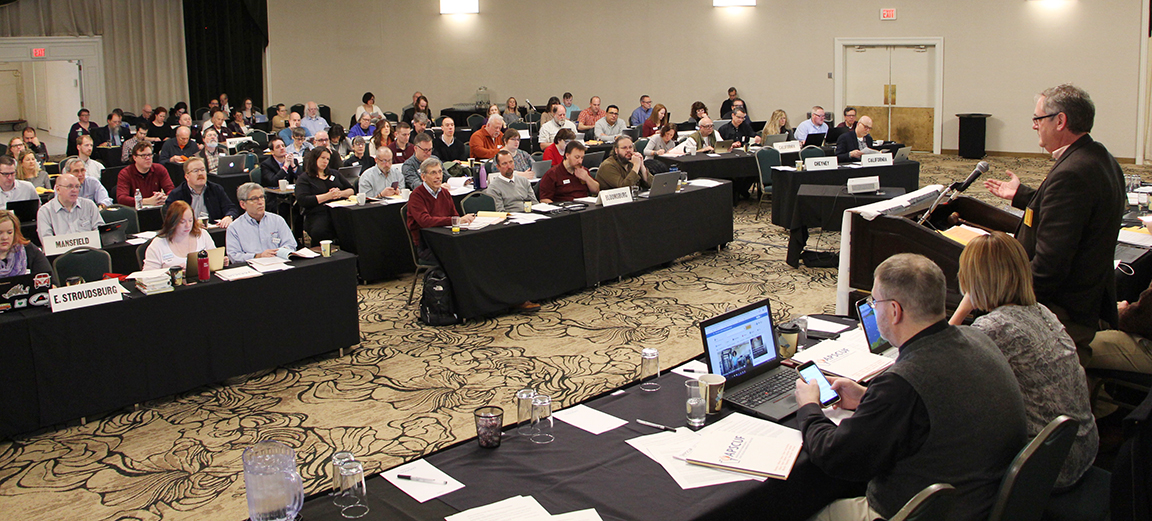
Delegates begin their day of speakers, reports, and discussion at APSCUF’s legislative assembly, held Feb. 7–8 at Radisson Hotel Harrisburg near Camp Hill. Photos/Kathryn Morton
At APSCUF’s 201st legislative assembly, delegates and officers welcomed guest speakers, discussed resolutions, heard committee reports, and elected a new officer-at-large. They met Feb. 7–8 at Radisson Hotel Harrisburg near Camp Hill.
Recurring topics were higher-education affordability, funding for Pennsylvania’s State System of Higher Education, student debt, and Gov. Wolf’s Nellie Bly Scholarship program, announced early in the week. APSCUF supports the Pennsylvania Promise initiative for affordable higher education, and with the debut of the governor’s proposal, we will mobilize around the plan, APSCUF President Dr. Kenneth M. Mash said. Because the governor announced his proposal so close to assembly, APSCUF still is developing its approach to championing the plan, Mash said. APSCUF will share more with members in the coming weeks about how they can advocate for these scholarships that could make higher education affordable for thousands of State System students.
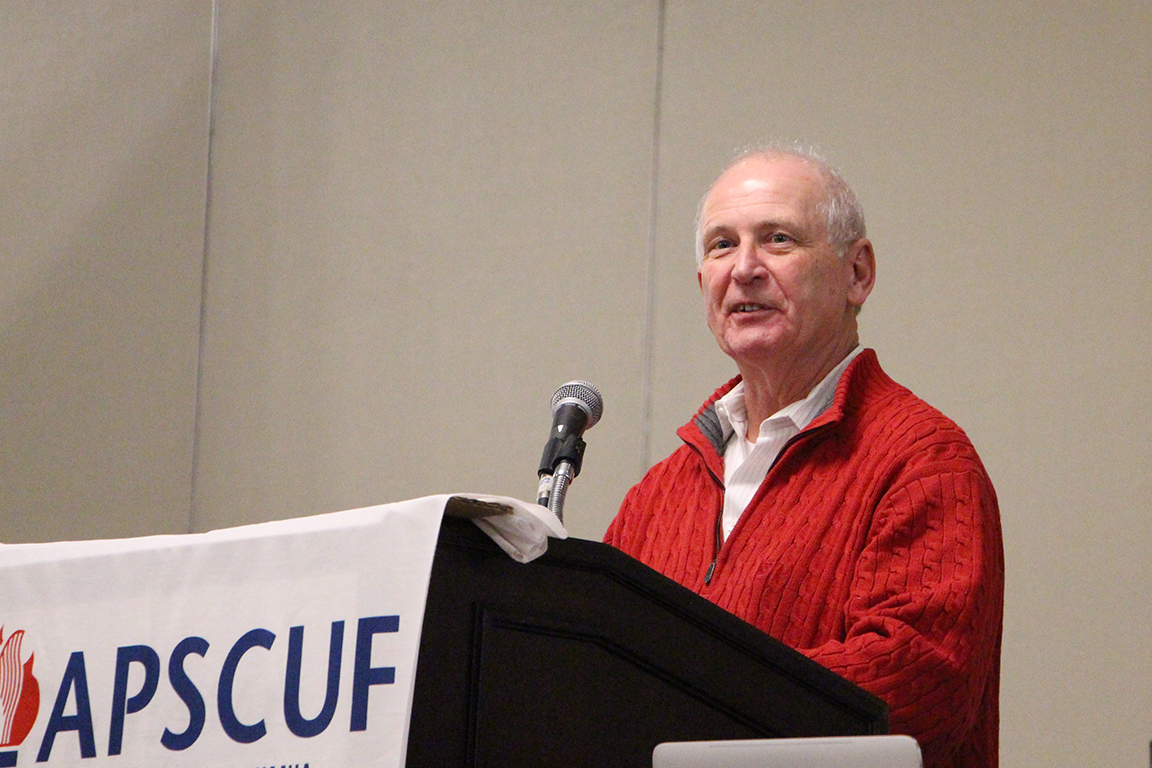
State Rep. David Millard, above, a Bloomsburg University graduate and former union leader with IBEW Local 1600, discussed higher-ed components of Gov. Tom Wolf’s budget proposal with delegates. The plan is an investment now and in the future, he said, and degrees must be affordable and accessible.
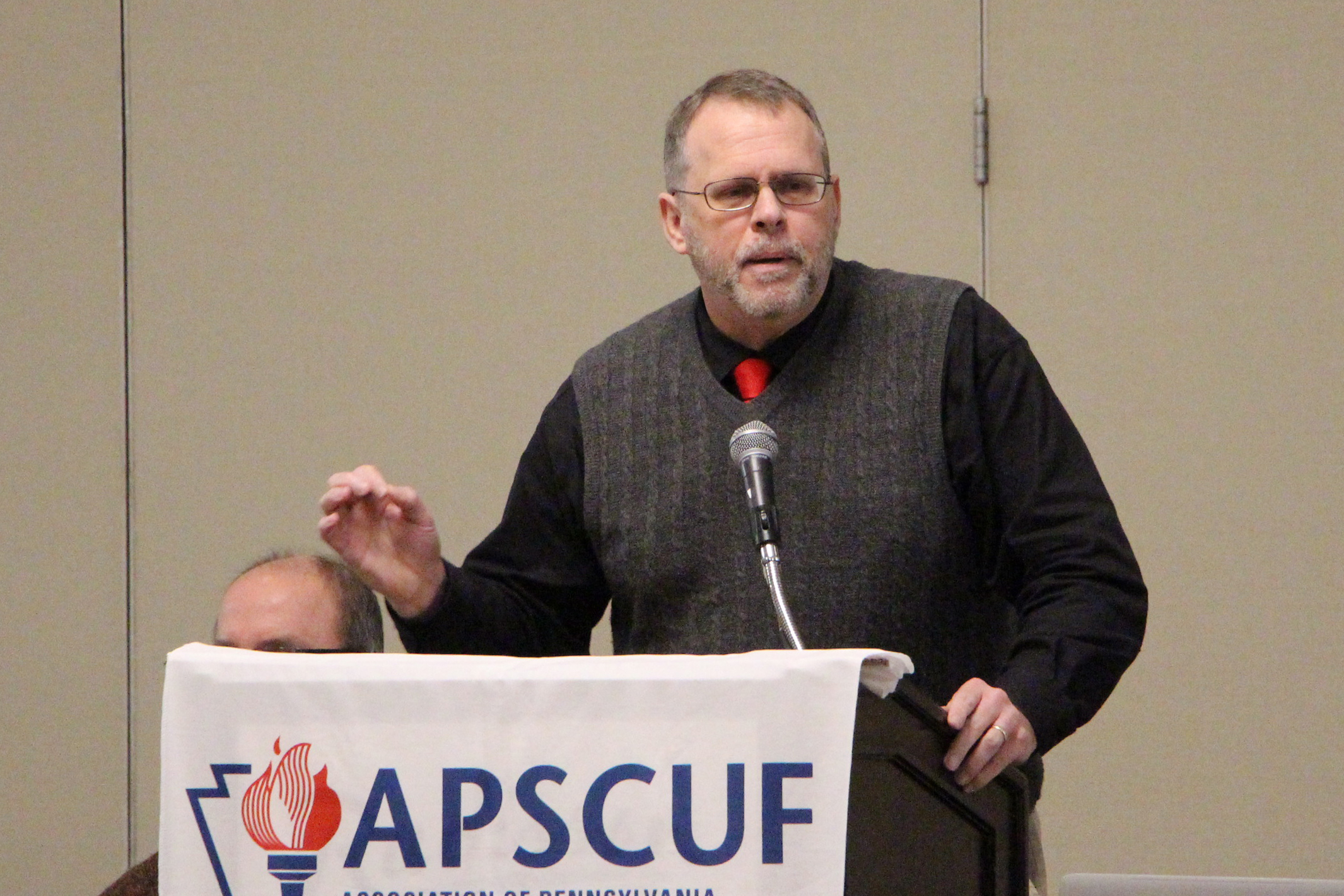
Coach Executive Leader John Gump of Kutztown University, above, updated delegates on the coaches’ collective bargaining agreement. Coaches that week voted to ratify their tentative agreement.
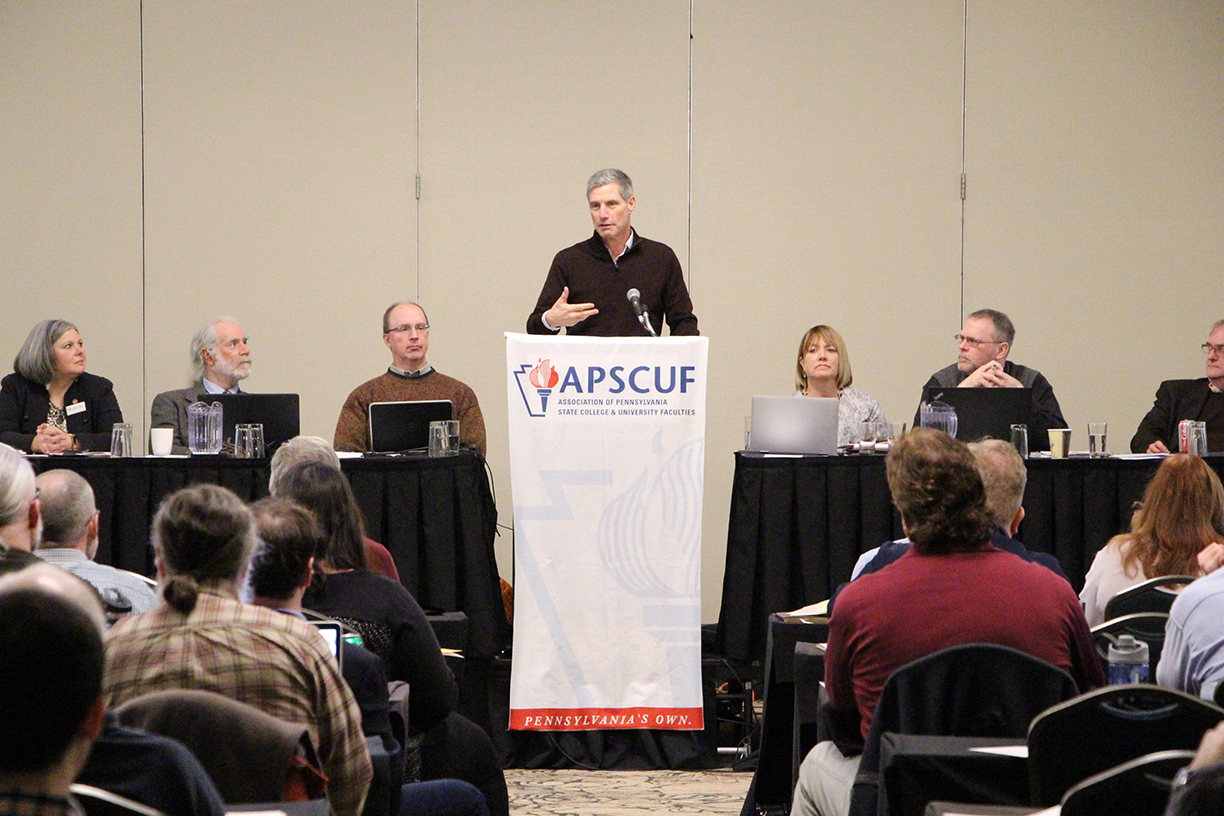
State System Chancellor Daniel Greenstein, at the podium above, spoke with delegates about the System’s sustainability plans and answered questions.
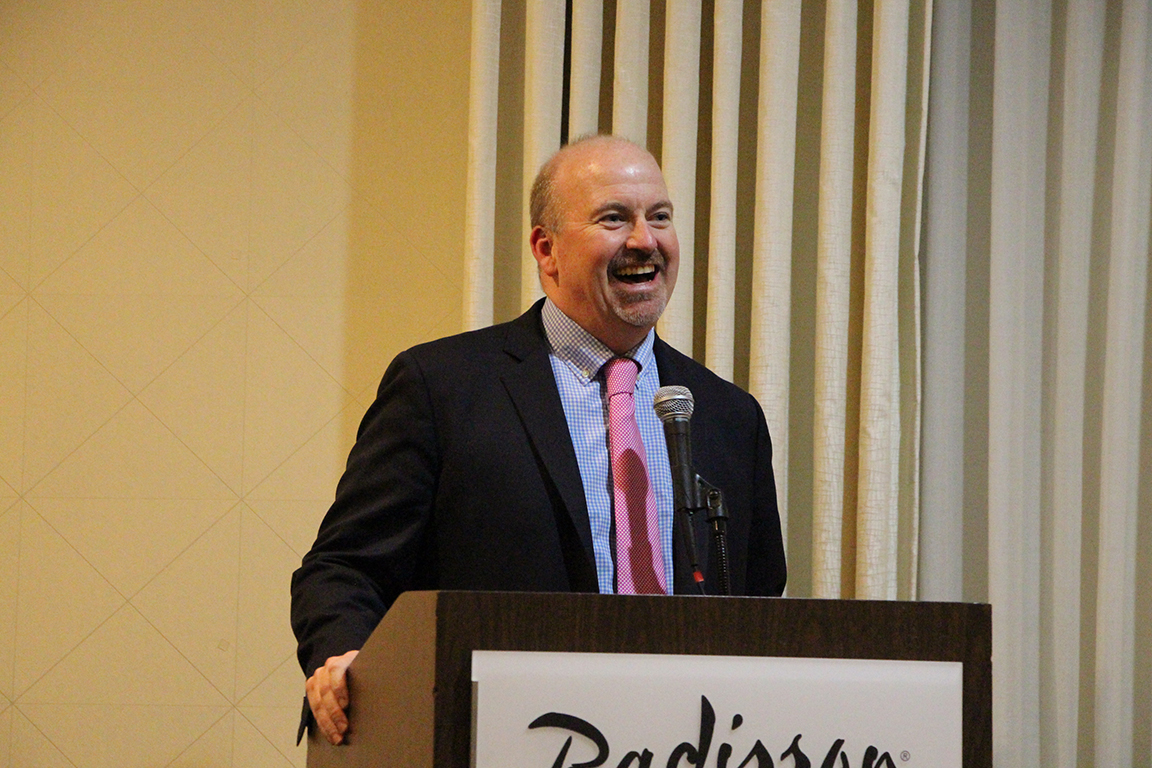
We need to get serious about how we fund higher education in Pennsylvania, Rep. Matt Bradford, above, told delegates and officers during dinner.
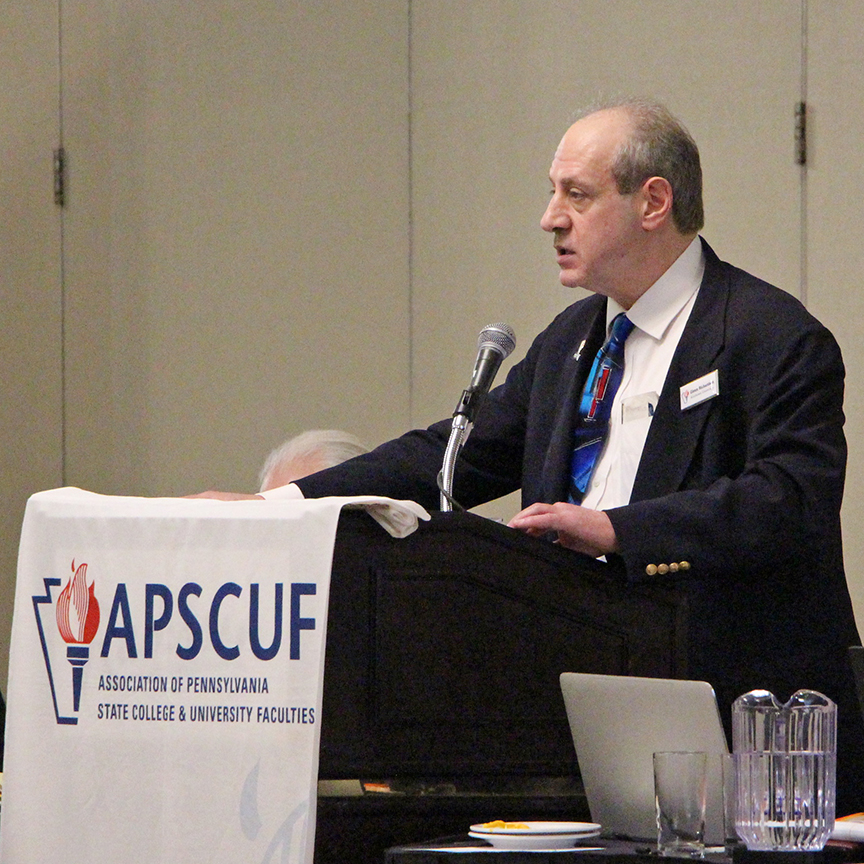
Delegates approved this resolution about psychological services. Glenn W. Richardson Jr. of Kutztown University, above, also addressed the issue in his report for the legislative committee he chairs.
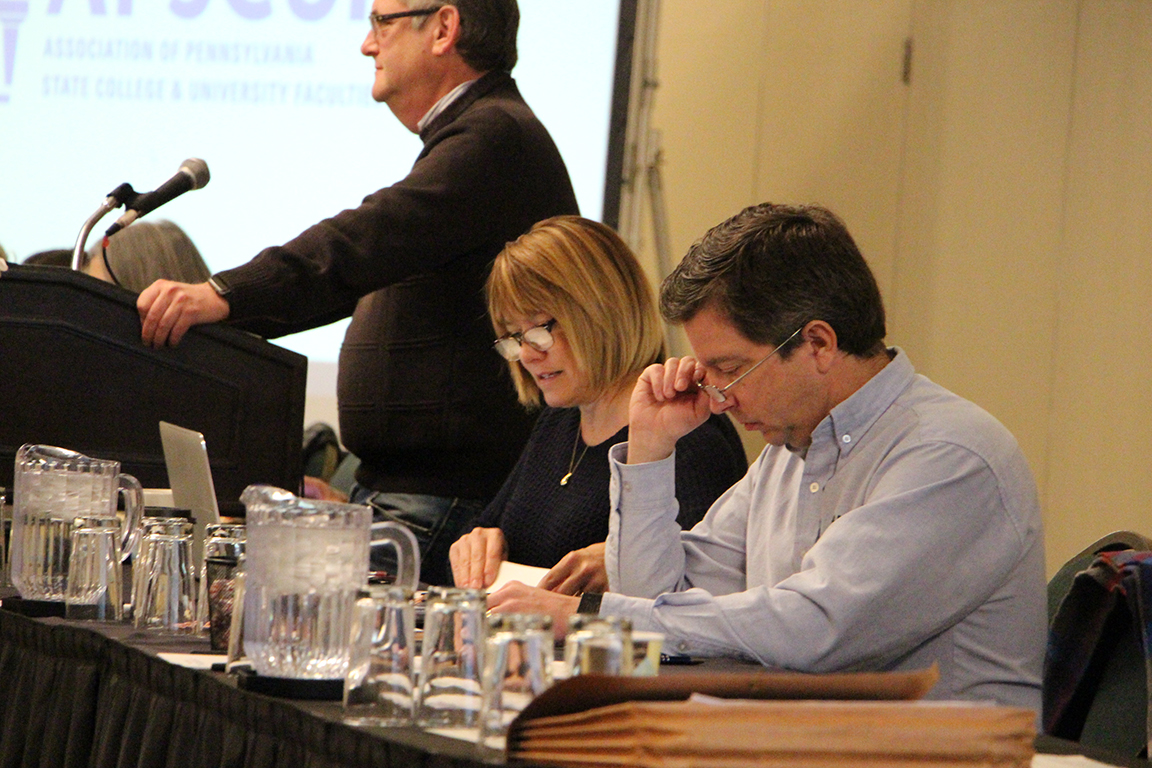
Delegates elected Matt Girton of Lock Haven University, above right, to fill the remainder of an officer-at-large term vacated by Kara Laskowski, who moved to the State meet-and-discuss team. Girton joined executive council immediately, taking his seat at the front of the room.
Click here to view additional photos via APSCUF’s Facebook page.
‘We don’t give up on our students’ – Remarks from Glenn Richardson, legislative committee chair, at legislative assembly
Our guest post today is by Dr. Glenn W. Richardson Jr. of Kutztown University. These are his comments to APSCUF’s legislative assembly in the Harrisburg area in February. Richardson chairs APSCUF’s statewide legislative committee and is a professor in Kutztown’s Department of Political Science and Public Administration.
I want to take just a few moments to speak to you about an issue that has come before our committee that I think goes directly to who we are as universities. It is how we deal with the mental-health crisis in our students. As you are aware, our brothers and sisters in the great teachers unions of our land have placed the provision of adequate support services, including psychological counseling for their students at the top of their agenda. In places like Chicago and Los Angeles, they walked the walk on the picket line to fight for the support our students need. It is one of the defining struggles of organized labor in our time.
Let me begin by placing this crisis in a national context. We have just ended a decade where, according to one scholar,
“Evidence suggests that (American college students have) “greater levels of stress and psychopathology than at any time in the nation’s history.” (Henriques 2014).
According to the American College Health Association National College Health Assessment II (Spring 2019) survey of college students, in the last year:
- 66.4 percent reported feeling overwhelming anxiety
- 57.5 percent reported feeling things were hopeless
- 46.2 percent reported feeling so depressed it was difficult to function
- 14.4 percent of college students reported seriously considering suicide
- 9.5 percent reported intentionally cutting, burning, or otherwise injuring themselves
- 2.3 percent reported attempting suicide
Last year, nearly a third of college students received treatment at campus counseling centers, according to the latest annual Healthy Minds Study, a web-based survey of 155,000 students from nearly 200 campuses (Rostain and Hibbs 2019).
I cannot speak to all our campuses, but the pathologies at Kutztown University exceed the national average:
- Last year, one in six Kutztown University students sought help from Counseling and Psychological Services. 49.6% of these students reported suicidal thoughts, a percentage far higher than the national average (36%).
- In the past few years, no fewer than three KU students have committed suicide.
I learned from my colleagues on the Legislative Committee that multiple campuses have seen multiple student deaths in the past semester.
Our faculty counselors are on the front lines in this great struggle. I want to share with you how one of them explained to me why they wouldn’t be able to attend a late-afternoon campus meeting on this issue:
I have three more crisis follow-ups to complete before I can leave the office. In the last week I saw 11 crisis sessions, one hospitalization, six biweekly therapy sessions, two intakes, gave supervision to a Ph.D. student, attended all department meetings, stayed after hours for documentation 4 1/2 hours, completed 13 case management contacts, attended zero lunches or breaks. This is a typical week for me.
This is how that faculty counselor described their job:
At Kutztown CPS, every day, I work with students who have chronic suicidal ideation and engage in self-harming behaviors. Complex Post Traumatic Stress Disorder, chronic sexual assault, chronic emotional abuse, and unresolved grief are the most common issues I see. Often students have no other resources; for example- parents who are unemployed, no health insurance-parents who do not believe mental illness is real- parents who tell their kids that seeking help is weak and, should they do so, tuition money will be withheld. I have sat through crisis sessions in which parents cancelled the students FSA card benefits and reported their car stolen because the student sought help. To initial sessions, students bring a history of witnessing violence, loss, internalized guilt and a fear that someone will tell them they are crazy. Often, I am the first person to who students have ever disclosed.
… Many of our students have survived chronic and sadistic abuse. Imagine, during your formative teenage years, being separated from your siblings and living with a parent who allows their paramour to barter use of a cell phone for sexual assault and rape. Imagine parents who punish you for a suicide attempt. Imagine parents who remove their child from college because they found out their child was seeking help. These are not isolated incidences. These are what is brought to my office on a daily basis.
Yet, despite requiring students with serious (but not harm threatening) mental-health issues to wait weeks or even a month for a therapeutic session, despite imposing limits of five visits per-student per-semester, our managers at KU believe our counseling center is adequately staffed.
This indifference to our students health and well-being has created a crisis among our faculty counselors. At KU, Our counseling faculty are overworked and stressed to the breaking point. They eat their lunches at their desks alone. Frequently they have no time for a break. They rarely have contact with their colleagues. Professional-development time, which is mandated by their licenses, is scare or non-existent.
Two counseling faculty have gone on full-time medical leave and another on part-time medical leave.
A recent article in The Washington Post addressed a similar misery among our nation’s physicians. It described the “moral injury” they felt having to perform medicine under the gun of corporatized metrics and protocols, a business model that interferes with patient care. Moral injury, the Post notes,
refers to the emotional, physical and spiritual harm people feel after “perpetrating, failing to prevent, or bearing witness to acts that transgress deeply held moral beliefs and expectations.”
This is exactly what our faculty counselors face.
When confronted about the mental-health crisis in our students, a prominent member of the Pennsylvania public higher-education community said that colleges and universities weren’t built to handle the current crisis in student mental health.
We weren’t built to handle digital either, but we managed.
We can do better.
We don’t give up on our students who struggle with mental health.
We don’t give up on our faculty counselors who pour their hearts and souls into their jobs despite the callous indifference of our administrators.
We don’t give up on our mission.
We don’t give up on our commitment to lift our students up, and build a more humane future.
We don’t give up on our students, and we don’t give up on each other.
Thank you, APSCUF!
* * *
ACHA-NCHA II (American College Health Association National College Health Assessment II). 2019. Undergraduate Student Reference Group Executive Summary Spring 2019. (Accessed online at https://www.acha.org/documents/ncha/NCHA-II_SPRING_2019_UNDERGRADUATE_REFERENCE%20_GROUP_EXECUTIVE_SUMMARY.pdf September 30, 2019).
Henriques, Gregg. 2014. “The College Student Mental Health Crisis.” Psychology Today. February 14.
Rostain, Anthony and B. Janet Hibbs. 2019. “Is Your Child Emotionally Ready for College?” Wall Street Journal. August 24-25. C1.
* * *
This post has been updated to correct statistics that were cut off when the text was posted online.
Coaches counted: Members say ‘yes’ to new agreement
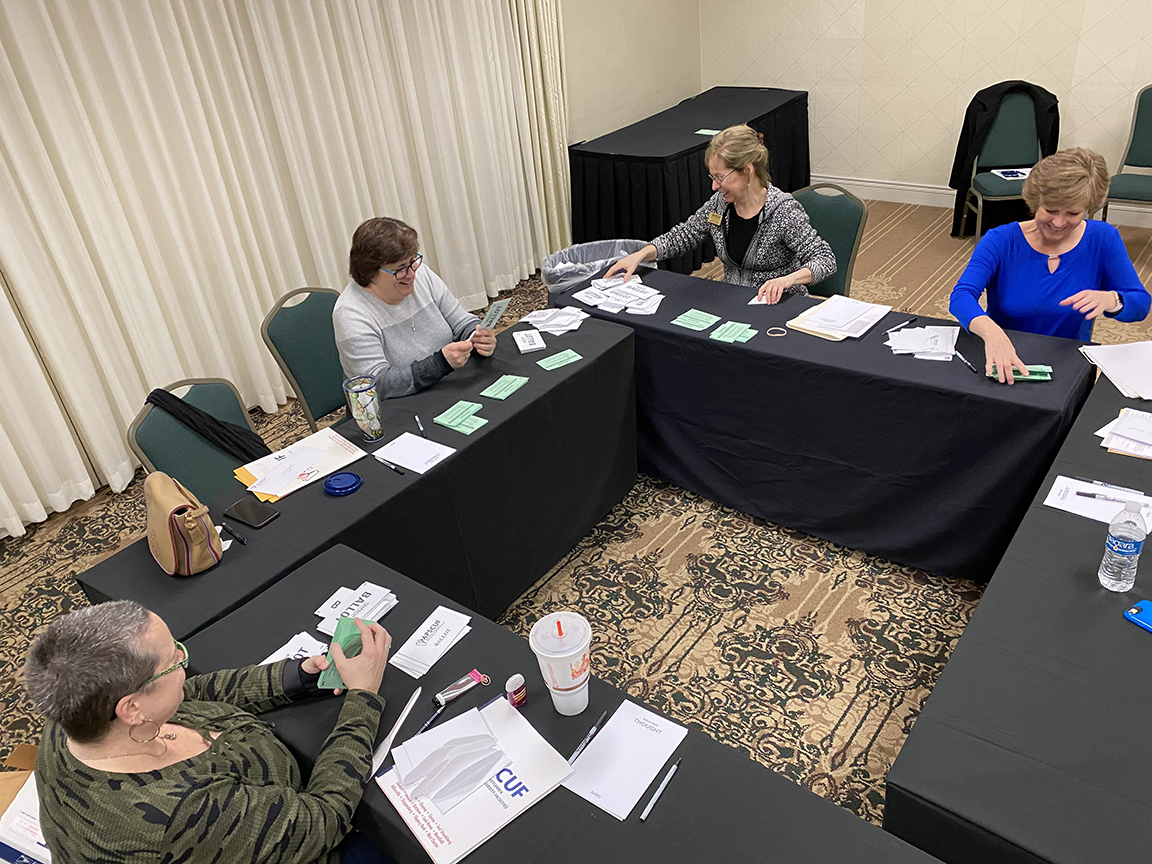 Members of APSCUF’s nominations-and-elections committee, assisted by staff, open contract-ratification ballots Feb. 6 at the Radisson Hotel Harrisburg near Camp Hill. Clockwise from bottom left are committee members Cassandra Reyes of West Chester University, Julie Kontos of Bloomsburg University, and Judy Silva of Slippery Rock University, and Bim Arthun, State APSCUF membership-services director.
The votes are in and counted: APSCUF coach members have approved their tentative collective bargaining agreement. Next, the document goes to Pennsylvania’s State System of Higher Education for approval. Click here to read today’s press release.
APSCUF talks higher ed after governor’s budget address
Sean Crampsie, APSCUF’s director of government relations, caught up with legislators after today’s Pennsylvania gubernatorial budget address. Watch the videos below for reactions to Gov. Tom Wolf’s higher-ed-heavy proposal.
“I think one of those big issues that Pennsylvanians are talking about is the student-debt crisis. Some part of that needs to be a conversation about how we fund higher ed,” Rep. Matthew Bradford said:
“I’m always interested in increasing enrollment in our State System schools,” Rep. Donna Oberlander said:
“So, the bottom line is that any investment in higher education is a return every day in the future,” Rep. David Millard said:
“Make sure (legislators) understand how important this is, how vital this is,” Sen. Vincent Hughes said of affordable higher-ed opportunities in the Commonwealth:
Ready to express your support to your legislators? Click here to look up their contact information.
Welcome, Katie Jeffries
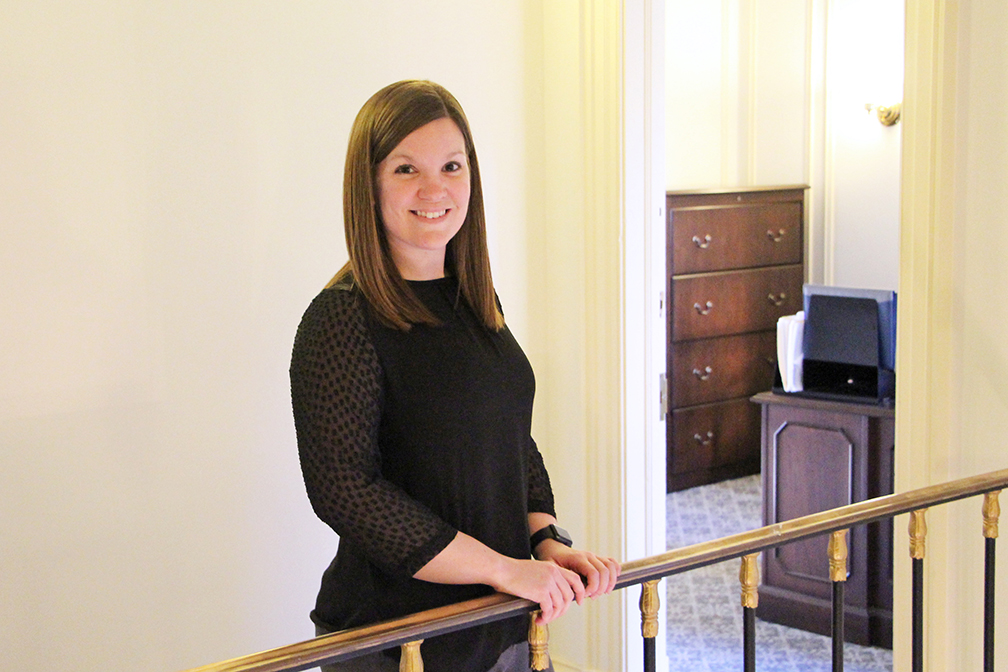
Today we welcomed Katie Jeffries, State APSCUF’s new executive assistant to the president. She’s arrived just in time for next week’s legislative assembly.