
Blog
Contract update: With negotiations stagnant, APSCUF sets date for emergency legislative assembly

Negotiators for APSCUF and the State System met June 24. Click here to read Friday’s press release.
The next faculty negotiations session is scheduled for July 19. The next coach session is slated for June 27.
Members, click here to sign up for text-message alerts about future contract news.
APSCUF life: Engaging students outside the computer science and engineering classroom
This summer, APSCUF is going behind the scenes to show you how faculty members and coaches continue to devote themselves to affordable, quality education even when class is not in session.
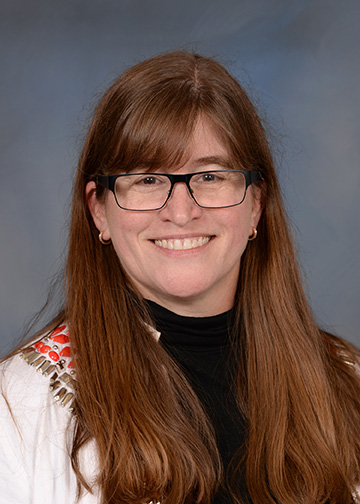 I am the chair of the Department of Computer Science and Engineering at Shippensburg, and we pride ourselves on engaging our students outside the classroom. The walls of our hallway are filled with posters from students working on undergraduate research projects, and almost all of our faculty are involved with extracurricular activities.
Our department has a long programming team history – back to at least the mid-1980s. Every year, our students compete in local and regional competitions – everything from traditional academic competitions to hackathons, online competitions, and CS Games in Canada. Some years we are really good (We went to the World Finals of the ACM Programming Competition in 2003.), and some years we are not so good. Every year, it is a valuable experience for our students. To support our students in these competitions, our faculty run practices every week, during which we present a problem and the help the students figure out how to solve that problem. In addition, we coach competition strategies and skills for working with each other.
In recent years, our game development club has truly blossomed. Weekly meetings include 15 to 20 students who are all actively developing a variety of games. They have been accepted to present those games at MagFest and Too Many Games. We are very proud that they present as indie developers — not as a university club! Again, this means a faculty member is at that three-hour meeting every week coaching those students and helping with the development of those games.
About 10 years ago, our female students demanded we create an organization for them, and the result is WiCS-E. We meet once a week and build fun things. We have built a computer-controlled waterfall that the team has shown off at maker fairs, RobotFest in Baltimore, and the U.S. Science and Engineering Fair in Washington, D.C. When the students asked for this, I was skeptical. I had been a female engineer for decades and had never needed a group like this. However, over the years, I have watched our upper-division students mentor our freshmen, giving them support as they learn to succeed in a male-dominated field. The regular meetings and the travel are great bonding activities, and we have students who have said that they would not have persisted without this group.
In addition to the long-running extracurricular activities, we have a process that lets students create groups when an interest arises. Recently, we have had groups interested in hacker rank competitions, robotics, networks, security, and software engineering. Every time one of these groups is created, a faculty member commits to engaging in the subject, planning for and participating in weekly meetings, and supporting the students as they pursue the subject.
So, extracurricular activities require significant faculty time that isn’t contractual. Why do we bother? The easy answer is that the things students are learning in the extracurricular activities often reinforce what they are learning in class. For example, I may select a programming team problem that is similar to something we are doing in our introductory classes to give the students a deeper understanding of the class material. Similarly, a student developing a game is learning problem-solving and coding skills that will help in completing class work.
However, the benefit of extracurricular activities goes far beyond directly feeding back into the classroom. Every interaction I can have with a student is a teaching opportunity. Outside class, we get to know individual students in a different way than when we see them in class. We learn their individual strengths and weaknesses and have the opportunity to individually help them address those weaknesses. Because the environment is less formal than a classroom, we can mentor a student on nonacademic topics such as study skills, time management, roommate management, etc. That close faculty-student relationship allows us to support and strengthen our students in many ways that feed back into their academic success.
I am very proud of the way the faculty in my department engage in extracurricular activities. Our hallway is generally abuzz with activity, and the faculty commitment and dedication to those activities enriches our students’ academic experience beyond what we could do just in a classroom.
Dr. Carol Wellington is chair of the Department of Computer Science and Engineering at Shippensburg University.
Free Common Sense Economics training session slated for Harrisburg
Practice your pro-union discussion skills and learn about taking action for workers’ rights with a free training session at the state office.
Former West Chester APSCUF President Lisa Millhous, who underwent Common Sense Economics training with AFL-CIO, has volunteered to share that knowledge with APSCUF members 2–3:30 p.m. Thursday, July 14, at APSCUF’s Harrisburg building.
“I think it would be powerful to help faculty understand how we ended up in an environment that is working against our contract negotiations (and our students’ best interests),” Millhous said.
To reserve your spot at the Harrisburg session, email Lisa Demko at
APSCUF life: Adding up the week of an assistant professor of nutrition
Teaching is a mammoth part of faculty members’ — and coaches’ — jobs, but their work does not end when students leave the classroom or field. There’s preparation, advising, grading (lots and lots of grading), research, and more.
This summer, APSCUF is going behind the scenes to show you how faculty members and coaches continue to devote themselves to affordable, quality education even when class is not in session.
For our inaugural post, meet Christine Karpinski, an assistant professor of nutrition at West Chester University.

I want to start off by saying that I love my job. I taught my first class in 1999 and immediately found my calling, after having worked outside of academia for 10 years. This blog post is in no way a complaint about my workload.
Anyone who knows me knows I don’t exaggerate, and my stories are always short and to the point. So let me get to the point: I work an average of 60 to 70 hours per week during a semester. Oh, did I mention that the 60 to 70 hours includes Saturdays and Sundays? Anyone who doesn’t understand that faculty must work on weekends doesn’t understand what it takes to manage four courses per semester and an average of 120 students.
So let me explain how those hours add up. Let me start on the weekend, because that’s truly where it begins. I typically work for 10 hours each weekend. This entails grading weekly assignments and larger papers/projects. Then there are the emails (about 20 per day). I also need to prep for the upcoming week. I never teach the exact same material in any given semester, so I am constantly updating my notes, slide, handouts, etc. Oh, and then there are more emails.
In my current position, I teach four classes per semester, so I’m standing in front of a classroom full of students for 12 hours each week, but that’s the easiest part of my job. I advise about 60 students about their schedules and professional aspirations, which adds up to a minimum of 900 minutes each semester. Then there are my five office hours, when any student or advisee can pop in with questions or concerns. In between classes and office hours, I spend several hours a day organizing, grading, and answering emails. These hours also entail collaborating with fellow faculty on projects, scholarship, and service. My most time-consuming service is my work with the WCU athletes for more than six years: providing nutrition services. For the past few years, I have mentored a group of nutrition undergraduate students who are interested in working with athletes. Mentoring these students adds many more hours to my work with the athletes than if I had just done the work myself — but it’s important work. Lastly, I attend approximately three to four hours of department and committee meetings every week. My service on these committees at all levels varies week to week, but on average takes about three hours of my time. Outside of all of this is my scholarship — which often falls by the wayside during a semester.
All told, I work an average of 10 hours per day, 10 hours per weekend, and several evenings each week. What I’ve told you is the truth — and I find great satisfaction in every hour I give to my job.
By the way, I haven’t even discussed the innumerable hours I work each winter and summer (while off contract) to prepare for the next semester, and to continue with my writing, research, and service. But that’s for another day …
Christine Karpinski is a board-certified specialist in sports nutrition and an assistant professor in West Chester University’s department of nutrition.
Contract update: State System proposal harmful to quality education, APSCUF leaders warn
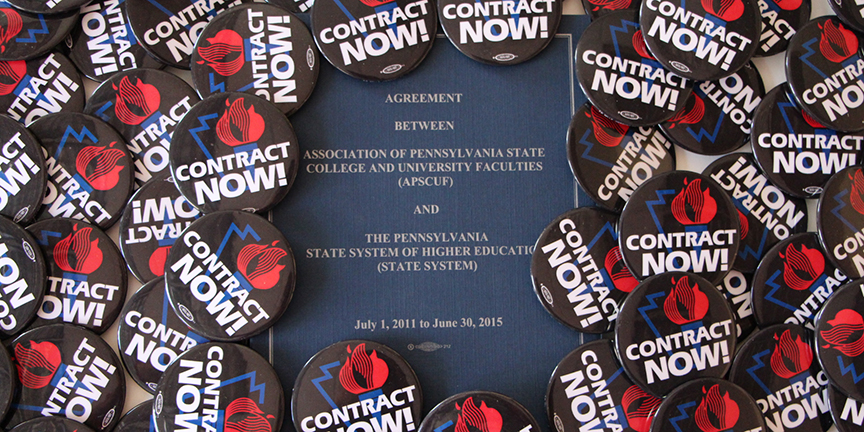
Negotiators for APSCUF and the State System met June 10. Click here to read Friday’s press release.
The next faculty negotiations session is scheduled for June 24. The next coach session is slated for June 27.
Members, click here to sign up for text-message alerts about future contract news.