Blog
APSCUF President, Dr. Kenneth M. Mash, Issues a Statement Regarding Faculty Layoffs at Mansfield University
Earlier today, Mansfield University, part of the Pennsylvania State System of Higher Education (PASSHE), announced planned faculty layoffs. APSCUF President, Dr. Kenneth M. Mash, is issuing the following response:
“Today is a sad day for public higher education. Under the guise of ‘aligning programs for a strategic vision’ and ‘workforce needs,’ President Fran Hendricks announced yet another round of faculty retrenchment at Mansfield University; it is a maneuver that the university has used three times in as many years. Despite the verbiage of working on behalf of students, these proposed cuts and layoffs will be detrimental. Mansfield students and all of our students deserve more than politicking and wordsmithing; they deserve a high quality education.
“This is not about ‘a strategic vision for Mansfield;’ it is a symptom of Governor Corbett’s $90 million cut to the PASSHE appropriation in 2011-12. All of the schools undergoing retrenchment now are the same schools that claimed financial hardship last year.
“It is disturbing to hear the Orwellian language used by PASSHE officials as they construct catchy phrases to mask stark financial realities. It is nothing short of doublespeak to say you want to prepare students for future employment and then rob them of the types of courses that provide the skills that business leaders consistently say they desire in employees.
“Alumni returning to Mansfield would barely recognize the place that they once called home. While some of the buildings remain the same – with the exception of shiny new dormitories – the academic core has undergone radical change. It has impacted every classroom experience and every aspect of student life. Mansfield students and faculty members have suffered enough through the last two rounds of retrenchment. The solution is clear: a restoration of the $90 million cut would enable Mansfield and universities facing similar financial situations to think strategically about moving forward.
“A university does not get better by hurting its current and future students; doing so only creates a downward spiral. No university has ever increased enrollment by announcing to prospective students that their desired majors might soon disappear. Rather than creating new buzzwords and rationalizations for the irrational, PASSHE and university officials must be true advocates for public higher education.
“APSCUF stands ready to work with Mansfield University, PASSHE, and other universities across the system to avoid this hardship and pain for the sake of the students that we are here to serve.”
Deirdre Kane Steps Down as Head Women’s Basketball Coach at West Chester
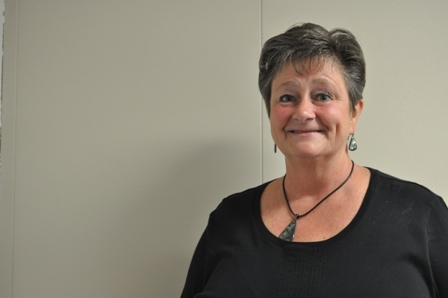
West Chester University’s head women’s basketball coach Deirdre Kane stepped down last month. In her tenure at WCU, Kane has a record of 428-302 and is the winningest coach in the program’s history. Additionally, she helped negotiate the first union contract for all coaches, an accomplishment that she considers to be one of her greatest victories.
While the coach is currently reacquainting herself with her kitchen, she looks back at her “amazing journey.”
Kane might have been shooting hoops since she was in the second grade, but she never thought her career would land her on the court. Originally, Kane dreamt of being a veterinarian. A rejection letter from veterinary school and a job offer to coach at a Catholic high school marked the beginning of Kane’s career.
After stepping foot onto a few university campuses including Salisbury University, the University of Pennsylvania, and Swarthmore College, Kane decided to choose a division 2 school for a more permanent position.
“Choosing West Chester was a no brainer,” she said. “It was much more family-oriented. “
Confronting a field that is dominated by males is not something you want to do alone. The coach’s family ended up being the team’s biggest fans. Her son and husband never missed a game. “They not only supported it, they lived it with me,” she said.
Off the court, Kane leaves West Chester University having established a lasting legacy as a leader in the movement to advance women’s athletics and in the ongoing fight for the fair treatment of her coach colleagues.
Keith White settles in as APSCUF’s first Coach Executive Leader

Hard work is valued over everything else. That is something that Keith White learned a long time ago.
White is currently Kutztown University’s Track and Field Coach, and he has just started his term as APSCUF’s first Coach Executive Leader. In this position he will also be the first coach to serve on State APSCUF’s Executive Council.
On the council, White will be the voice of the coaches at the 14 universities. He plans on listening and learning from “the top level leadership in the union.”
He might be new to his position and the Executive Council, but White is no stranger to the State System. When he was eighteen, all he wanted was to get out of the steel mills in his hometown Lebanon, PA. When White got accepted into Millersville University, he packed his bags and headed for college. Four years later, White became the first member of his family with a college degree.
The coach did not have to travel far from the graduation stage; he started his career in the Track and Field Department at Millersville. After several successful years at Millersville, White decided to stay within the PASSHE system and took a job at Kutztown.
While the coach thinks he made the right decision to stay within the PASSHE system, he worries about the present-day cost of higher education.
“With higher education costs sky rocketing, I hope we do not lose our way,” he said.
White believes coaches play a vital role in recruiting and attracting students to all 14 universities. He says a coach’s job is much more than what you see on the field.
“Coaches give students guidance, mentoring, and structure,” White said.
Coaches play an instrumental role in the life of collegiate athletes. It is for that reason that White spends his summers recruiting, fundraising, and trying to get a head start to the next season.
Regardless of what he is doing, White simply loves being a coach.
“The coaching life is an amazing profession, and it enriches my life daily — I could not be any luckier,” he said.
Former APSCUF President, Dr. Steve Hicks, Reflects on “Realignment”
By Dr. Steve Hicks, Past President of APSCUF and Lock Haven University Faculty Member
I don’t know about you, but I get tired of hearing politicians, board members, and university administrators toss around the buzzwords like “workforce planning” and “program realignment” in what they claim is a need to “reform” higher education.
Rarely do you hear anyone elucidate the meaning of these buzzwords.
In fact, program realignment was the central point of Chancellor Brogan’s missive to “everyone” on July 30th – right before the collective bargaining agreement’s deadline for the initial retrenchment letter.
It was on our local Meet & Discuss agenda at Lock Haven University that week (“workforce planning”).
What does it mean? How can the fourteen state system universities realign and reform to get — what?
I have heard this twaddle for years. Some of the gall was hearing it at Governor Corbett’s post-secondary education commission hearings two summers ago – they changed the name from “higher education commission” when they realized they weren’t talking about higher ed – as at multiple hearings testifiers stood and decried the Commonwealth’s lack of welders!
[A note on welders: according to a source I’ll repeatedly use, the PA Labor & Industry Department High Priority Occupation List, we need all of 528 more welders, cutters, solderers and brazers in the Commonwealth per year.]
Here’s what the Labor & Industry list tells us: there are 27 occupations designated as needing a Bachelor’s degree or more on the list of 106. How many jobs per year? 10,853. PASSHE graduates more than double that every year, as do the state-relateds (Pitt, Penn St, Temple); that number is non-sustaining. What are we reshaping for?
The most needed bachelor’s degree occupation? 1,668 accountants and auditors. We already do that.
Second? Marketing research analysts (889). We already do that.
Third? Computer system analysts. We do that. Maybe not everywhere and in the numbers we need (though there are only 670 jobs per year in PA in this) but it’s not something we need to reform to do.
So, what are we realigning to or for?
This question is even more perplexing when you look at studies about what employers want. Like this one from the American Association of Colleges and Universities (AACU) from 2013. Like many other such studies, it turns out executives hiring care more about the generic skills learned at a university, critical thinking, computation, written and oral communication, problem solving, than a specific major. The much maligned philosophy major, or French major, shockingly! has what they want. Much reinforced by quality general education (core curriculum) courses and by multiple years of reinforcement in multiple disciplines and multiple courses.
I ask again: what is it we are missing and what are we supposed to “align” with?
Administrators keep saying things like “we need to match the faculty with our student demand.” They talk about investing in the “high demand programs.”
But universities respond to “high demand” – or anything else – slowly. This year’s “high demand” is tomorrow’s “out of demand” – remember when journalists were in demand (post-Watergate)? Remember when school teachers were in high demand (state budget cuts have killed that)? Instead, universities, as PASSHE schools do, should educate students broadly so they can supply those “soft skills” no matter what the major and adapt from job to job as their lives, our economy, and their goals change – they all will change careers three times. Worrying about nailing that first job seems short-sighted, which is one thing universities aren’t supposed to be.
I won’t speak here as to why all these “leaders” think higher education needs to reform, but I will say this clearly and soundly: it’s a misguided attempt to get four-year universities to do what they aren’t supposed to (welding?!?!?) and to forget our core aptitude: no matter the major, teaching students to think critically, communicate well, and solve the problems of any prospective employer. Literally tens of thousands of jobs need those skills and those graduates – we need to keep “forming” students like that and the Commonwealth will be in fine shape.
Instead of program realignment and workforce planning, let’s have some innovative thoughts about how to get more high school graduates into to college, to keep them in college (we need to spend money so high risk 18-year-olds have a real chance of succeeding on campus), and how to mitigate the ever-increasing cost of public higher ed – even as we received flat funding from the state for the third straight year (after the 18% cut in 2011), students are asked to pay 3% more tuition and 15% more in tech fees, when they already average almost a welder’s annual wage in debt when they graduate. THIS is what politicians, administrators and board members should be focused on: more accessibility, not on the next “hot” (a relative term) program. The market will take care of that, thank you.
Dr. Seth Kahn, APSCUF Member and Adjunct Advocate, Summarizes Lessons Learned at the COCAL Conference
Dr. Seth Kahn is an APSCUF and faculty member from West Chester University. As a guest blogger, his views reflected below do not necessarily reflect the views of the organization as a whole.
First, a loud thank you to APSCUF for sending me to New York City August 4-5 for the Coalition of Contingent Academic Labor’s 11th biennial conference. If you’re unfamiliar with COCAL, the organization has emerged since the late 1990s as a–if not the–central venue in which adjunct activists collaborate to develop strategies and tactics to win better working conditions for contingent faculty. COCAL brings together contingent/adjunct activists from Canada and Mexico (both of which have hosted conferences) with their US counterparts, understanding contingency as a globalizing phenomenon.
I learned a lot at this conference, and before getting into the details, maybe the most important lesson is something I already realized (perhaps the most forceful statement of it by and for adjunct faculty comes from Keith Hoeller) but had reinforced more palpably than I could have imagined–
Lesson #1: While tenured and tenure-track faculty should and can be helpful advocates/allies for adjunct faculty equity, the real push for equity comes directly from adjunct faculty. I’m not sure how many other tenured/tenure-track people were there (I recognized a couple but expect there were some I just didn’t know), but the energy, talent, and commitment in the room were almost entirely adjunct-driven. If I could bring anything back to APSCUF from this conference, it’s a dose of that commitment for all adjunct members of the union; we know the talent and energy are here. The struggle for equity is everybody’s, including yours.
Other people have covered the conference’s proceedings. This post from the Chronicle of Higher Education‘s Vitae section offers a coherent overview of events. Inside Higher Ed’s coverage of the opening plenary session addresses the need to take direct action, including strikes (Stanley Aronowitz argued strongly for wildcat strikes; Cindy Oliver, president of the Federation of Post-Secondary Educators of British Columbia, contended that any public employee besides emergency responders has a moral right to strike) and better to articulate the (academic) labor movement in terms of non-financial issues. Other panelists and audience members considered tactics available to faculty in non-union states. The second plenary, which I’ll say more about below, focused on specific strategies and tactics (mostly in union environments) for gaining and protecting contingent faculty power. The third plenary focused on linking arguments about contingent academic labor to issues of contingency in other labor sectors.
At that second plenary, called “Inside the Academy: The Cutting Edge,” I learned about a variety of efforts that I think translate pretty directly into possible APSCUF positions/actions:
Lesson #2: We need to support in every way we can SEIU’s Adjunct Action campaign, along with similar AFT and USW metro organizing efforts, even in areas that don’t directly affect our members. USW has been working in Pittsburgh, and AFT is organizing across the Philly metro area as well as one campus in Pittsburgh. While APSCUF adjunct faculty are members of our bargaining unit already and won’t be targets of those efforts, there’s no reason that we can’t and shouldn’t offer support–to the extent that it’s welcome. Not only are better conditions for contingent faculty an obvious good, but often APSCUF adjunct faculty work at multiple institutions, and we’re benefiting them by working to improve those institutions.
Lesson #3: Genuine adjunct equity goes beyond compensation. Donna Nebenzahl, representing the Concordia University Part-time Faculty Association (CUPFA), described their successes on two important fronts. In their last contract, they negotiated a $240,000 (Canadian dollars, but still) professional development fund specifically for part-time faculty. The dollar amount aside, the key concept is the commitment the union and university have made. I strongly call on APSCUF to make a similarly strong commitment to our adjunct faculty, as members of our bargaining unit. Likewise, Condordia part-time faculty have (to borrow Nebenzahl’s words) “permeate[d] the governance of the university” by winning representation on hiring committees, curriculum committees, and other governing bodies. APSCUF permanent faculty members need to support our adjunct colleagues in this regard–there’s simply no good reason not to.
Alternating with the plenaries, the other major events at the conference were three breakout meetings of “interest groups” focused on specific strategic problems: working with media; negotiating equity; legal issues (Affordable Care Act; discrimination issues; etc); building a national agenda (working with unions and other organizations across institutions and regions); and organizing (with) students. The charge for the interest groups was loose, but the gist was to develop a short strategy statement, and if there was time to develop whatever tactical recommendations we could in order to operationalize the strategy. I joined the student group, learning at the beginning of the first session that organizers expected us to stay in a group for all three (I had planned on attending the media and national agenda groups as well, but deferred to the preference of the people who had done the work of putting the conference together).
I wasn’t able to attend the closing session at which all five groups presented their final results, but (with the permission of our group members and facilitators) I can share what the student group developed, and one member of the national agenda group has already blogged theirs, a project they call the Democracy Index. That group is undertaking an effort that resonates with and builds from what many contingent labor activists have been trying to do for years–develop a method for praising institutions that do well by their adjunct faculty, and just as importantly, calling out institutions that do wrong. There have been attempts in my field (Composition/Rhetoric/English) to push our professional organizations (MLA, CCCC, NCTE) to censure departments/programs with bad labor practices, and the response has always been that bylaws (and, they argue, laws about non-profit status) prevent them from censuring/punishing anybody. The Democracy Index doesn’t call for censure, specifically, but instead proposes to publicize rankings and reports on institutions’ treatment of adjunct faculty: compensation, but also access to professional resources, academic freedom, and shared governance (see Lesson #2, above).
Lesson #4: Throughout the conference (and certainly in other adjunct activist venues), one of the common tensions is over how to prioritize compensation vs governance and professionalization issues. Is it more important to make sure everybody can pay their rent and buy food first, even if that comes at the expense of governance rights, or do we establish governance rights first in order to demand compensation equity more effectively? The answer to that is largely local, of course. APSCUF does reasonably well in terms of compensation, particularly for full-time adjunct faculty, but adjunct access to governance rights and professional development is inconsistently supported. We must do better.
The interest group on organizing with students produced a statement of Core Principles and Practices (click this link to download the file, which we saved as Student Strategy Document). Our conversations focused on the need to balance the ethics of democratic organizing (not coercing students into supporting adjuncts), the common issues that students and adjunct faculty face, and the needs of adjunct faculty.
Lesson #5: The work we did in the student group reinforces the need for our Student-Faculty Liaisons, at both local and state levels, to be involved in efforts for faculty equity of all statuses, including adjuncts. Many of our students already work contingent jobs. Many will graduate and, without a tectonic shift in the economy, find other contingent jobs. We can fight contingency in unison, without exploiting students to do it, if we’re careful and attentive to the ethics of what we ask for.
Again, I’m very grateful to APSCUF for sending me to New York, and I’m grateful to all the organizers and participants at the conference for their welcome, their energy, and a commitment I hope I can share across the union and with adjunct activists and sympathizers everywhere.
I’ll end with this request, a campaign I’m involved in that garnered some attention and support at the conference too. A few weeks ago, the good folks at State APSCUF posted a piece I wrote about this petition to David Weil at the Department of Labor , calling for signatures from faculty at all ranks/statuses, managers, staff, students, parents/guardians, families, anybody with an interest in quality higher ed. As of August 10, we’re approaching 6800 signatures. Please sign and share.