
Blog
Let’s talk about the election
The 2020 election has enormous implications for public higher education in Pennsylvania. Join APSCUF for election-related informational events:
 MEMBERS-ONLY PRE- AND POST-ELECTION DISCUSSIONS:
Sean Crampsie, State APSCUF director of government relations, will present an overview of the 2020 election, targeted state House and state Senate races, and discuss potential outcomes for the Nov. 3 election. The in-depth Zoom meeting is slated 6–8 p.m. Tuesday, Sept. 29. Then join Crampsie noon–2 p.m. Friday, Nov. 6, for a Zoom presentation recapping the 2020 election. He’ll review what the state House and state Senate chambers will look like for 2021–22 and what that means for the state of public higher education in Pennsylvania. Click here to register for one or both of the events. The free sessions are for APSCUF members only. To become an APSCUF member, start here.
STUDENT-ATHLETE VOTER-EDUCATION SESSION:
Student-athletes in Pennsylvania’s State System of Higher Education are invited to a voter-education seminar 6–9 p.m. Sunday, Sept. 27. Slated speakers include Pennsylvania Lt. Gov. John Fetterman, Pennsylvania House Minority Whip Jordan Harris and APSCUF President Dr. Jamie Martin. Click here for registration information for this free, virtual event.
Meet APSCUF’s longest-standing member
Only one APSCUF member who has been active since the group became a union in 1973 remains a part of the organization today. Randy Jesick began teaching journalism at Indiana University in 1969, at which point APSCUF was a professional association, and Pennsylvania professors had no union representation.
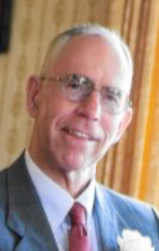
Jesick
“I think everybody was excited about finally having an organization, a union to represent them and give them a stronger voice, in the curriculum especially,” he said. “I was really pleased once the union was a fact of life.”
Before Jesick was an APSCUF member, he had been a professor for four years, and previous to that he hadn’t had aspirations for teaching at all. Jesick worked in public relations for IUP before professors David Truby and Craig Swauger asked him to join a new journalism major in the works for IUP’s English department. Jesick decided to give it a shot, and he began looking for ways to prepare for his new job.
“I contacted professors around the country to seek their advice,” he said. “The best thing I did though was interview 12 or so IUP students at the time and asked them, ‘Who is the best professor you’ve had? Why did you feel that way?’”
Jesick described overcoming the nerves he experienced during his first semester.
“Sometimes I thought, ‘I shouldn’t be here,’ but there were other classes where the conversations flowed back and forth, and I came out of the classroom floating,” he said. “For whatever reason, we got though that semester, and I knew then that this was what I wanted to do.”
Being a part of APSCUF provided Jesick with additional benefits, and he stressed the sense of security behind having them.
“I was just so pleased with all the benefits the union was able to achieve — not just the salary, which is very competitive with most state systems, but even things like, for example, all four of my kids had braces and that was covered,” he said.
Jesick comes from a family that knows the value of a union — and collective action. His father, Maynard Jesick, was a steel worker who took part in the United Steelworkers of America’s steel strike of 1959. When Jesick, knowing what his father went through, took part in the 2016 APSCUF strike, he was pleased with how quickly it was resolved.
“When it lasted only three days, it really hit home because I remembered my father had to take side jobs painting,” he said.
Jesick described teaching as “a calling,” and said that it is “ultimately for the benefit of the student.” Now, thanks to his decision to teach, he has influenced the lives of thousands of students, including Michele Papake, associate professor and chairperson of IUP’s journalism and public-relations department, who has known Jesick since she was a student more than 30 years ago.
“Randy was one of my professors when I attended IUP as an undergraduate in the late ’80s,” she said. “He is as rigorous and as passionate a professor today as he was back then. He is an amazing mentor, colleague and friend. He has helped to shape me into the professor I am today, and I’m proud to know him.”
—Kyle Bower,
former APSCUF intern
APSCUF, TAUP and TUGSA letter: ‘Change course before it is too late’


18 August 2020
Dear Members of the Board of Trustees for the PASSHE System and Temple:
Together, we represent over 9000 faculty, librarians, academic advisors, staff, graduate students, medical students, and coaches at 15 different universities. Along with the students we serve, we are the lifeblood of our institutions: We teach the classes, win the grants, do the research, make the art, advise the students, coach the teams, serve on the committees, and serve our communities. When called on to pivot to online work in response to the current pandemic, we did so without hesitation and with unstinting effort. Now, we are being called on again to invest extraordinary time and resources to adapt to the grave challenges posed by the pandemic. And, again, we are ready to answer the call.
However, we are also being asked to needlessly risk our lives and the lives of those we love. We cannot accept this, and neither should you.
We call on you to acknowledge that the ferocity of this virus and the failures in our national response have upended the plans our institutions have constructed. We urge you to join institutions large and small, rich and poor, public and private who have recently realized they must alter course. As of this writing, the U.S. has surpassed 5 million COVID-19 infections, an average of more than 53,000 new infections a day; the situation is much more dire than many of us imagined it would be. We are devastated by the loss of more than 170,000 Americans to COVID-19. Doctors and scientists every day warn us about the potential long-term health impacts of COVID-19 and encourage us to continue to be vigilant in our efforts to flatten the curve and reduce transmission. We have seen students, staff, and faculty get sick and die around the country, including at university campuses and their neighboring communities. We also need to acknowledge the enormous burden of increased family responsibilities that faculty, staff, and students are juggling due to the pandemic, making in-person teaching extremely difficult and in some cases logistically impossible.
We understand that people are supposed to wear masks and practice social distancing; however, we know that asymptomatic transmission can happen quickly in indoor spaces even when these precautions are taken. We also know that research on the propensity of our students to take risks makes it unwise to rely on their compliance with mitigation measures. Given the current state of COVID-19 in the U.S. and our institutions’ inadequate safety protocols and lack of consistent and widespread testing, we are being asked to choose between our health and our jobs when we know that we can teach effectively online.
We know that the choices before you could not be more difficult. We also know that a great deal of well-intentioned work, expertise, and considerable financial resources have gone into these plans. We understand that you want to satisfy our students’ desire for in-person instruction (though we are not convinced that you have properly surveyed them to see what they actually want given the current conditions). Of course, we would rather feel free to teach, advise, and coach them in person. We understand that you are concerned about revenue; so are we, since our jobs may hang in the balance.
But these considerations must be outweighed by the imperative to protect the health and safety of our members, our students, other employees of the university, and our neighbors.
Here’s how you can resist the temptation of questionable financial gains for one semester at the expense of the longer-term financial, reputational, and ethical health of the institutions you oversee:
1. Immediately reduce all in-person work to those classes legally required to be in-person. This might include courses required for licensure and for incoming international students.
2. Honor all requests by one of our members to work remotely. This should not be done by requiring employees to submit to a time-consuming process that requires them to disclose sensitive health information. ALL employees, of whatever rank, track, or seniority, must be accommodated.
If these two conditions were met, the threat to the health and safety of the university community would be significantly reduced. But you should also:
3. Provide clear metrics of infections, hospitalizations and deaths that would trigger a further shutdown of in-person operations.
4. Make available to all members of the university community, including neighbors, a dashboard that clearly displays the current state and history of COVID-19 infections, including hospitalizations and deaths, currently, within the last 14 days, and since the start of the semester.
5. Ensure that those few members who do need to work on campus are fully protected. This includes:
a) Requiring all members of the campus community to wear the types of masks or face coverings inside buildings that have been proven effective in limiting the spread of the virus. Our institutions should provide this equipment to ensure a minimum standard.
b) Instituting a robust testing and contact tracing program that will make it possible to stay in front of any outbreak.
c) Providing clear signage to remind all members of the university the importance of hand hygiene, mask wearing, and social distancing.
d) Upgrading HVAC systems in any building where our members work or students live to meet ASHRAE standards.
e) Providing clear policies on members’ rights in reacting to and reporting, without fear of penalty, any breach of safety protocols by students and others in the campus community.
f) Providing every college and department adequate maintenance protocols as per relevant guidelines as well as safety equipment, supplies, and adequate cleaning provided by the central University budget. There must be equity in the distribution of these resources among schools, departments and programs.
Our members and elected leaders stand ready to enter into a dialogue with you about how to address these grave problems. But we must first sound the alarm about the terrible risks you run if you do not change course. The potential damage to the universities we love could not be more profound–the loss of money, faith in leadership, health, and life. If you do not value the health and safety of the university community as you should, you will poison the relationship among all of its stakeholders for the foreseeable future.
Classes have already started on some of our campuses and will start soon at the rest. The window for acting before tragedy strikes is closing. We urge you to change course before it is too late.
We look forward to hearing from you.
Sincerely,
The Executive Committees of APSCUF, TAUP, and TUGSA and members of the student body of the Lewis Katz School of Medicine
APSCUF members switch roles, take on new challenges
To transition from one team to another brings a fresh set of challenges, but it happens frequently in APSCUF, as it did with Cliff Johnston and Kara Laskowski. The two changed positions this year. Johnston was chair for the State meet-and-discuss team before being elected to executive council as treasurer in April. Conversely, Laskowski moved from executive council, where she was an officer-at-large, to the State meet-and-discuss chair.
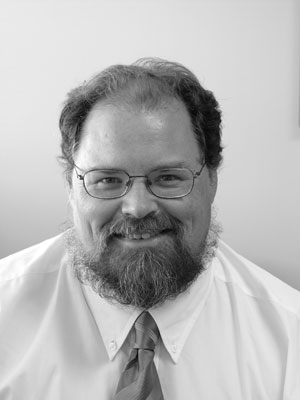
Johnston
This mixing and matching of positions may seem like an organizational game of musical chairs, but it’s one that Johnston and Laskowski are happy to play.
“You don’t want to be stagnant, where the same people are doing the same things over and over,” Johnston, an associate professor of mathematics at West Chester University, said. “In a volunteer organization, you want people to serve where they want to serve, not pigeonhole people and say, ‘You’re going to do this.’”
Laskowski, professor and department chair of human communication studies at Shippensburg University, concurred, saying, “We have people that are willing to serve, and we have a breadth of vision across the committees. That interplay is essential. It’s a great thing.”
Johnston and Laskowksi both emphasized the common attributes between positions. Johnston said his work with budgetary issues on State meet-and-discuss, coupled with his background in mathematics, has helped him acclimate to his position as treasurer.
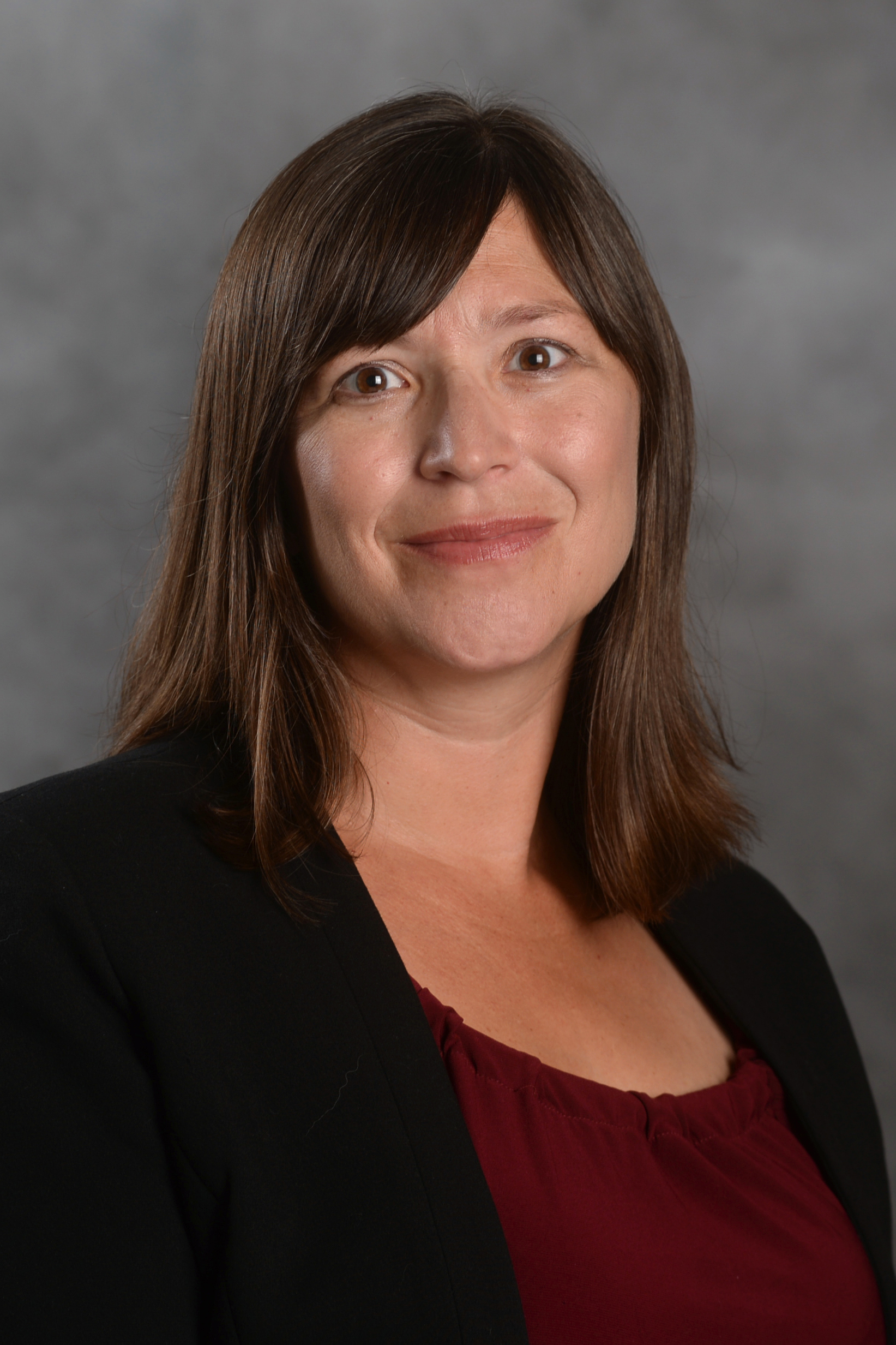
Laskowski
“We did a lot of budget analysis in meet-and-discuss — asking, ‘Are you doing with your money what you say you’re doing?’” he said. “If we’re not, that needs to be called out and corrected. It’s all about the logic and the thought processes.”
Laskowski mentioned an element that she said is common across the union.
“APSCUF as an organization and meet-and-discuss as a component — the strength of both come from the membership,” she said. “When we are there, we are representing 5,000 people, and having that weight behind us is important and potent.”
Leaving a subgroup of the organization inevitably means sacrificing things that are distinctive to that group. Laskowski, however, mentioned that community and camaraderie lost from one group can be gained in another.
“The people that I served with were fabulous,” she said. “Looking at the staff across the organization is amazing. But it works in both directions. I miss them, but I’m also excited.”
Laskowski said knowing where to go when trying to get involved can be difficult, but that simply offering one’s service and getting to know local leadership can go a long way.
“There’s so much room for involvement,” she said. “We need the knowledge, the talent. For anyone who is uncertain in terms of where they would fit, striking up that relationship with their chapter president or local leadership and indicating their interest in getting involved is all that they need to do. We need that, and we welcome it.”
—Kyle Bower,
former APSCUF intern
See Dr. Jamie Martin’s remarks to the Board of Governors – Aug. 13, 2020
The Aug. 13 Board of Governors meeting took place via Zoom and conference call. Below are APSCUF President Dr. Jamie Martin’s comments as prepared:
Chairwoman Shapira, Chancellor Greenstein, governors, university presidents and guests,
As I begin my remarks this morning, I would like to start by making an observation — and it is an obvious one. I am not giving these remarks at the Dixon University Center. All of us are in our offices or homes scattered throughout the Commonwealth. This meeting is remote because we are all aware that assembling in person in the board room in the DUC would not allow for appropriate physical distancing. As we know, the CDC recommends at least 6 feet of physical distance between oneself and others, and this should be done in concert with other preventive actions, such as wearing masks, to reduce the spread of COVID-19. While all of us would prefer to be in the same room and to interact with one another face-to-face, the Board of Governors is not meeting in person because it would not be safe to do so.
On the other hand, something very different is beginning to occur on some of the State System campuses. On Monday, face-to-face classes began at Cheyney University. Concerns have been raised by some of my colleagues there regarding an inability for students and faculty to appropriately physically distance in some of the classrooms. When these concerns were raised, a member of the administration stated that there are no specific requirements that there must be 6 feet of distance between desks, rather the guidelines suggest this should occur “when feasible.” This type of statement represents a lack of concern — and perhaps even disdain — for the students and faculty at one of our nation’s oldest HBCUs.
This week, students are arriving back to campus at Bloomsburg and Shippensburg universities, and they will be on campus for up to a week before classes begin. Students will begin arriving early next week at Indiana University of Pennsylvania and mid-week at Kutztown University. Many believe, and science seems to confirm, that having students return to campuses for in-person classes — or even hyflex classes — is unsafe, and the proliferation of COVID-19 cases at other universities is alarming. According to a recent New York Times report, more than 6,600 coronavirus cases have been linked to U.S.colleges and universities, and the fall semester has not yet begun at most of them.
In Georgia, the Cherokee County School District began K-12 classes on Aug. 3. On Aug. 4, parents were notified that a student tested positive for COVID-19, and that resulted in 20 students and a teacher being sent into quarantine for two weeks. The class is now being taught remotely. By the start of the second week of classes, over 900 students and staff members have been ordered to quarantine, and nearly 60 positive cases have been reported. One important difference between the K-12 schools and colleges and universities is that K-12 students return at the end of every school day to their homes and are under the supervision of parents or guardians. At our universities, this is not the case; our students do not have supervision of parents or guardians.
In a recent op-ed in The Chronicle of Higher Education, Gregg Gonsalves, an assistant professor of epidemiology at Yale University, said this:
“Dorms are like cruise ships on land or prisons without bars: people living in proximity, in frequent contact over extended periods of time. For many infectious pathogens, such settings are a boon for disease transmission…Colleges are perfect incubators for viral spread and propagation.”
I feel compelled to continue to articulate the real apprehensions of the members of my union. I want the position and concerns of APSCUF to be very well-documented. My members are convinced, as am I, that there will be cases of COVID-19 on some of our campuses; that students, staff and faculty will become ill; and there will be spread to the communities in which our universities are located.
I will close by saying that I hope and pray that I am wrong. I hope that our universities will be able to catch lightning in a bottle and that there will be no cases of COVID-19 on any of our campuses. If that occurs, I will stand before all of you, in person or remotely, and will admit my error and will encourage you to remind me of it. My real fear, however, is that the students, staff and faculty at Cheyney University — because they are the first university to open — will be the canaries in the coal mine, and I hope that they will all emerge healthy and safe.
Thank you for your time, and I wish you all continued good health.