
Blog
Chancellor updates legislators about redesign, integrations – October 2020
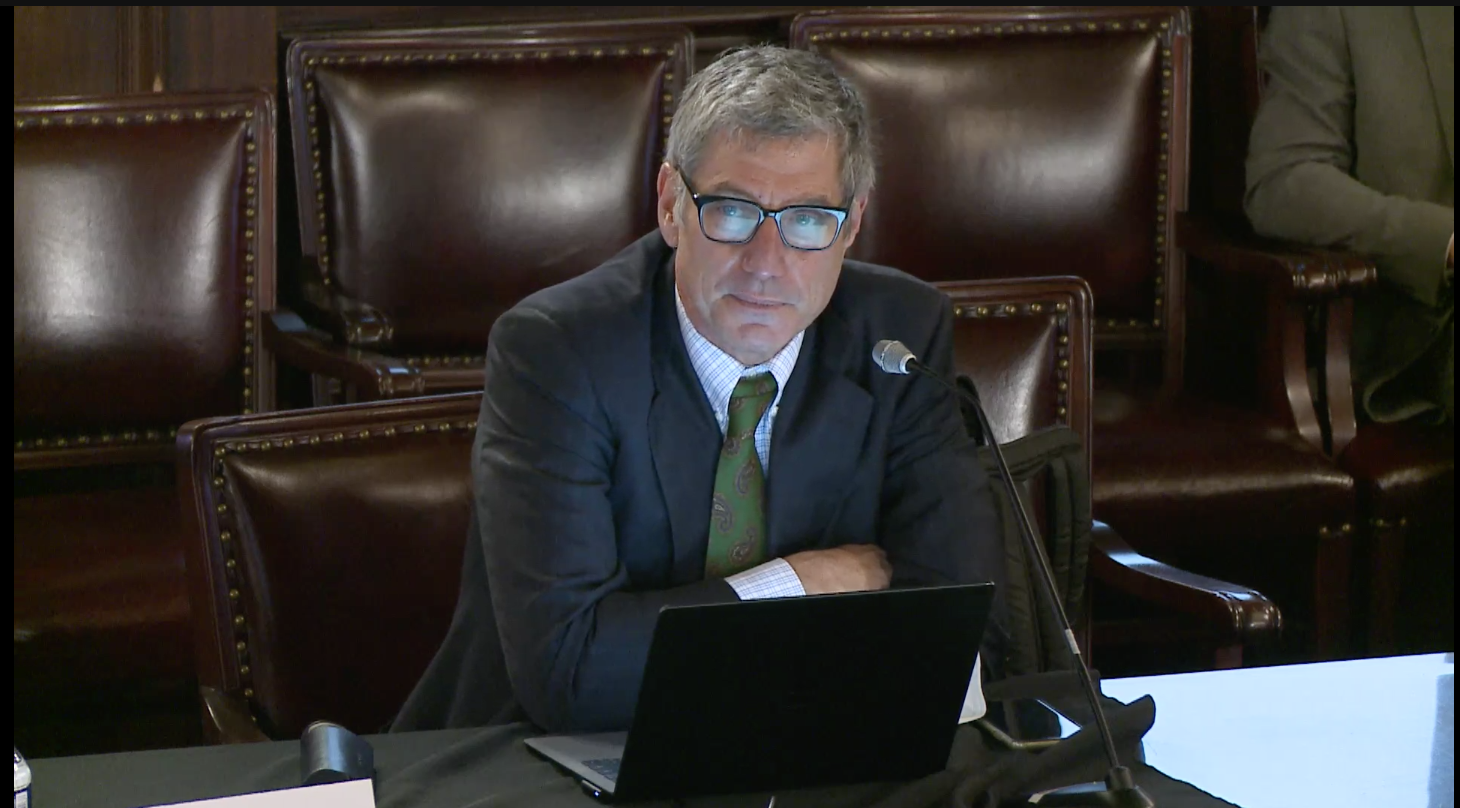
Photo/Pennsylvania House Republican Communications Multimedia Division footage
As required by Act 50 of 2020, Chancellor Daniel Greenstein updated legislators about Pennsylvania’s State System of Higher Education’s redesign and integration plans at joint House and Senate appropriation- and education-committee hearings Monday and Wednesday. Click here to watch the full House hearing, and click here to watch the full Senate hearing. Read APSCUF’s collated tweets from the hearings below.
Stay healthy this fall

Updated flu-shot information is posted on APSCUF’s forms-and-benefits page.
Highmark subscribers are eligible for up to two free masks. Click here and enter your ID (ONLY the numerical portion, not the preceding letters) to check your eligibility and to place an order.
See Dr. Jamie Martin’s remarks to the Board of Governors – Oct. 14, 2020
The Oct. 14 Board of Governors meeting took place via Zoom and streamed via YouTube. Below are APSCUF President Dr. Jamie Martin’s comments as prepared.
Chairwoman Shapira, Chancellor Greenstein, governors, university presidents and guests,
Good afternoon.
My name is Jamie Martin, and I am the president of APSCUF, and we represent the faculty and coaches at our 14 wonderful state-owned universities. I am speaking here today with a heavy heart as we continue to hear of the plans to fire more than 300 of my colleagues at seven of our universities. I want to address the narrative that we have been hearing as it relates to the need to retrench. One thing that is an important part of the narrative is the decline in student enrollment at our universities since 2010–11, and this is a true statement. Another piece of the narrative points to the increase in cost to attend our universities. This also is a true statement. A final element of the narrative is the need to return to a time when we were most efficient — and translated that means returning to the student/faculty ratio of 2010–11.
I want to offer a slightly different version of the narrative as it relates to enrollments, to cost and to the student/faculty ratios. When looking at trends, it is critical to examine a timeframe that allows an accurate picture of what has occurred over time. When looking at enrollments and discussing a trend, it is not statistically sound to use as a starting point the “high-water mark,” when the enrollments at our universities reached their peak. That is deceptive. If you look at a 20-year trend, rather than a 10-year trend (from 1999 to 2019) a very different picture emerges. Between 2000 and 2010, student enrollment INCREASED by 24%, from 95,000 students to 119,000. Between 2010 and 2019, enrollments decreased by 19% — thus, the trend looks like a normal curve and one that was predicted by demographers. Something else has also followed a similar trend line, and that is the number of faculty at our universities. Between 2000 and 2010, the number of faculty rose by 7.4%, and from 2010 to 2019, the number of faculty decreased by 7.4%. We have not yet received the data on the number of faculty at our universities this fall, but we do know that 258 of our members retired since the start of fall 2019, and while we have asked for the cost savings of that number of retirements, we have not yet received it. However, our researcher estimates that it will translate into tens of millions of dollars in savings for the State System. There is one area where we have not seen a similar trend, and that is among the management ranks at our universities, as their numbers have increased by 5% since 2010.
With regard to the cost of attending one of our universities, we all realize that tuition has increased over the last 10 years, but the reasons that it has are important to examine. When I attended IUP as an undergraduate student, the state appropriations covered approximately 75% of the cost of attendance, and I, with my parents’ help, paid the remaining costs. Our current students face a different reality: They now have the burden of paying approximately 75% of the cost of attendance. While my members are appreciative of the support of the legislature and the governor for increasing appropriations over the past few years, we all have heard where Pennsylvania ranks in funding for public higher education. Tuition, however, is not the only cost driver. At around the same point in time that PASSHE endured a 19% cut in appropriations, which is also around the time of our peak enrollments, decisions were made to undertake a building frenzy at many of our universities. New residence halls were built, new recreation centers, new convention centers, climbing walls, etc. The individuals who were most vocal about how problematic and financially unwise this was, were the faculty — I was one of them at IUP. Our voices were ignored and dismissed. The result is that debt service (the amount of money needed to make principal and interest payments) has increased 43% between 2010–11 and 2018–19 at 10 of our universities. California, Edinboro, Mansfield, Lock Haven and Shippensburg all purchased their student housing; their debt service all doubled. For comparison purposes, only Cheyney had a deficit in 2010–11. The predictable result is that housing costs skyrocketed, as did other types of fees. At most of our universities, housing costs and fees far outpace tuition costs. This is an important part of the narrative.
The student/faculty ratio is something that we have been hearing a lot about, particularly honing in on the ratio that existed in 2010–11 (when our enrollments peaked) and comparing it to what exists today. As I just stated, this is problematic and deceptive. I looked at a 20-year trend in the student/faculty ratios: In 2000, the ratio was 18.72, and in 2019 the ratio was 18.62. That ratio is currently higher than students at Penn State, Pitt, Temple, Lincoln and the SUNY system experience. Those students are afforded the opportunity to enjoy smaller classes on average. I do not understand why our students, many of whom come from working- and middle-class families, are less deserving of that same opportunity.
As all of you are likely aware, APSCUF and PASSHE negotiated a collective bargaining agreement that is in effect from 2019 to 2023. We signed the contract on Dec. 11, 2019. During the negotiations process, Chancellor Greenstein and Chairwoman Shapira attended nearly every meeting that we had along with the rest of their team. We sat for hours in the same room, for many days and months discussing a wide array of topics — some of them very difficult and very challenging. We worked through them all. I know that the chancellor had regular meetings with my predecessor, Dr. Ken Mash, where they engaged in discussions about difficult and challenging issues. At no point during the negotiations did the issue of the dire financial situation that would lead to the need to retrench 300 faculty members ever come up. Does anyone in attendance here today believe that we would not be interested in developing alternatives to that during negotiations? We acknowledge that COVID-19 has had an impact on the finances of our universities and our system, but I want to be clear in pointing out that the decision to accelerate the financial sustainability process from a five-year timeline to a three-year timeline came in April, before we knew much about COVID.
The cavalier manner in which “rightsizing” is discussed — making it sound innocuous — is distressing. It is not innocuous. I had a student ask me, “What does retrenchment even mean?” I explained that it means a person is being fired through no fault of their own. It is not because they are not performing their job. It is not because of a disciplinary issue. It is because a decision was made to reduce the workforce. It is imperative that everyone is aware of what we are talking about: 300 or more faculty members losing their careers and their healthcare in the middle of a global pandemic. I have concerns that the “rightsizing” is going to disproportionately impact my colleagues who are women and who are minority. And all of this occurring because of the directive to reach an arbitrary student/faculty ratio of 2010–11 that was an anomaly.
Even more distressing is that our students are left out of the narrative. The impact of retrenchment on them has not been a topic of discussion. I am truly worried about them. They, like us all, are trying to survive this pandemic, but they are being kept in the dark about what is happening on seven of our campuses. What will happen to them when they are all able to return to campus and discover that the major they chose no longer exists and they must either transfer or choose another major? What happens when they discover that their faculty adviser is gone? What will happen when the classes that they need to take to progress are not available and that sizes of their classes have increased? They deserve to be told what is happening and how it will affect them. They deserve to at least be included in the narrative.
Thank you, and I hope that all of you continue to be well.
Assembly honors Benn, addresses threats
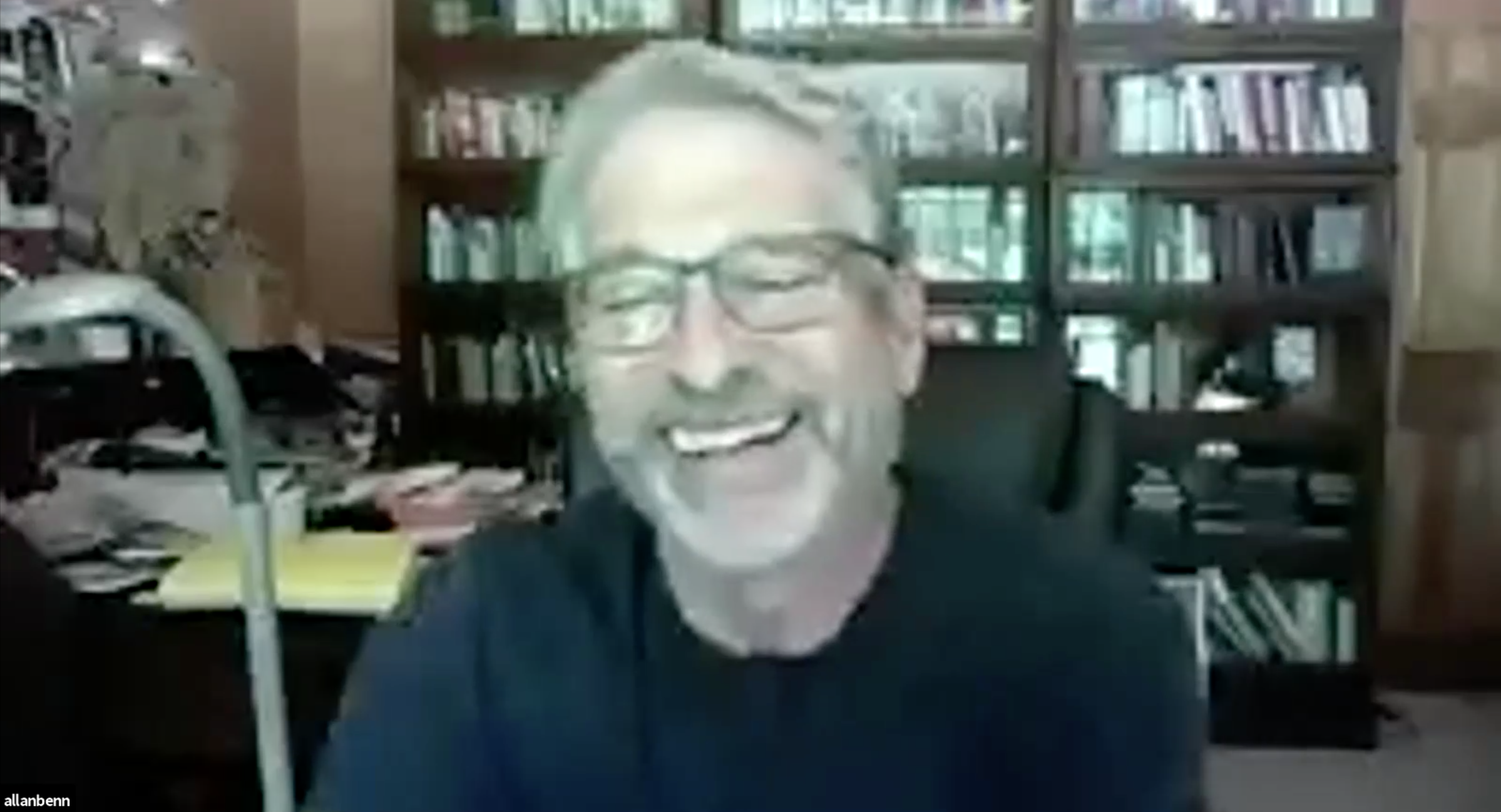
Retired East Stroudsburg University Distinguished Professor Dr. Allan Benn addresses legislative assembly Sept. 18. APSCUF members lauded his distinguished service, for which he was honored. Below: Pennsylvania Attorney General Josh Shapiro speaks with delegates about higher-education issues. APSCUF Zoom photos
APSCUF’s September legislative assembly tackled its usual fare — committee reports and a guest speaker — and focused on the retrenchment threats and sustainability plans in Pennsylvania’s State System of Higher Education. For health and safety during the continued pandemic, representatives from all 14 campuses met in a condensed, one-day session Sept. 18, held via Zoom.
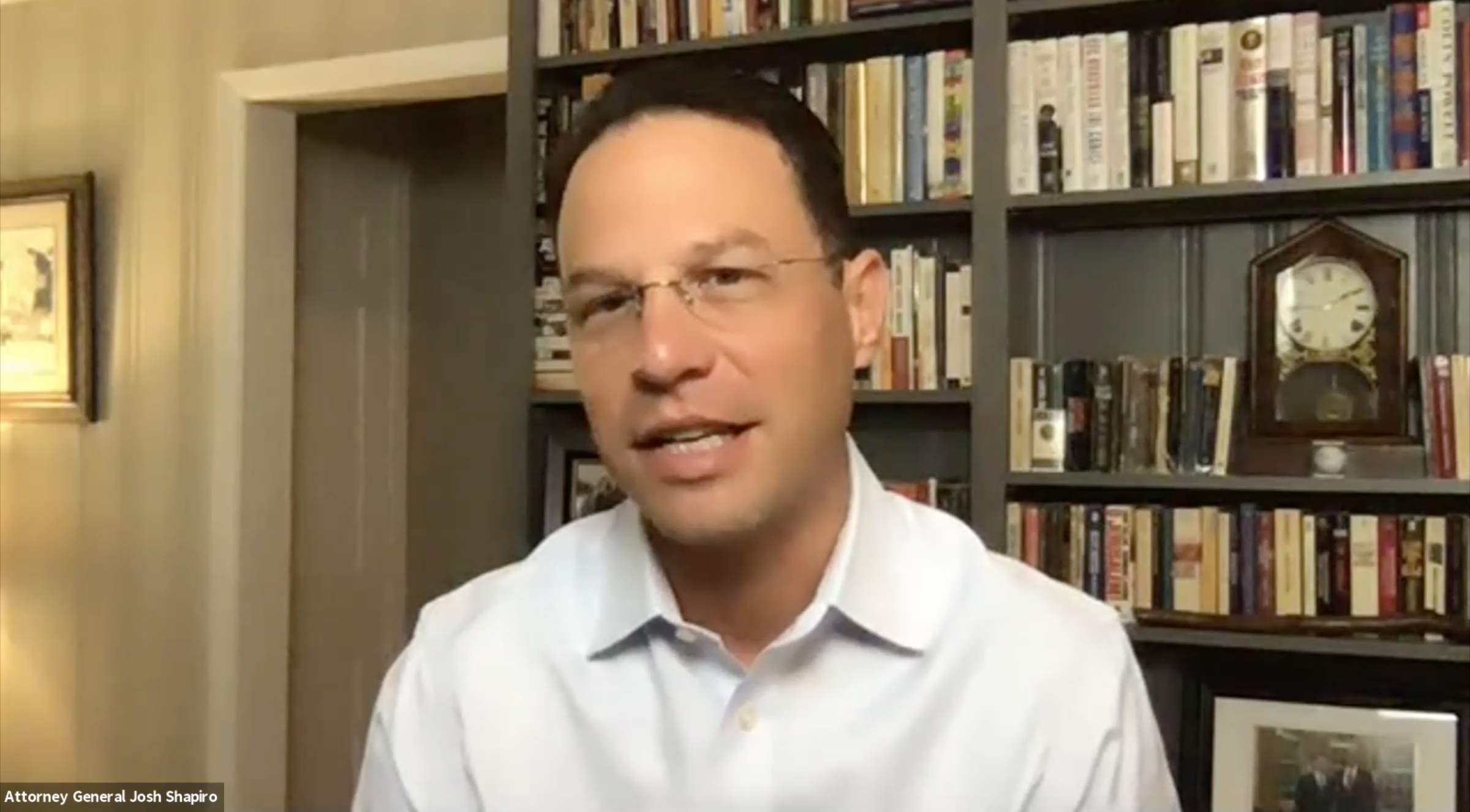 Guest and Pennsylvania Attorney General Josh Shapiro spoke about higher-education related cases and took member questions.
Delegates also approve a bylaw change addressing videoconferencing and conference calls for legislative assemblies.
The assembly honored retired Dr. Allan Benn of East Stroudsburg University with its Distinguished Service Award, with physical commemoration to come at a future in-person assembly.
“(APSCUF) gave me a cause and gave me a voice, and for that I’ll always be grateful,” Benn told the assembly.
Lisa Demko, retired executive assistant to the president, also will be honored for distinguished service of more than 30 years.
Students: Ask your retrenchment questions Sept. 30

Retrenchment (faculty layoffs) is a possibility at seven of our 14 State System universities. A smaller faculty means higher student/faculty ratios and possible program cuts. APSCUF is working diligently to find alternatives to these layoffs. Support and advocacy from students and alumni would be an immense help to the cause. Learn a bit more about retrenchment (possible faculty layoffs) on APSCUF’s Students page.
APSCUF leadership and staff will answer retrenchment-related questions from State System students and student journalists 3–4 p.m. Wednesday, Sept. 30. The event is open to students from all 14 State System universities. To register for the event, exclusively for students at State System universities, click here. APSCUF members may attend, but student questions will be given priority.